Monday, January 9, 2017

Turn Your Lights On, And Take Your Shoe Off ...

Sometimes, it seems like your eyes will pop out of your head ...


The scenery in this part of the world is mind blowing.  Patagonia is the region at the southern end of South America shared by Chile and Argentina, and it is so splendid that it is almost too much to comprehend.


We have spent the last couple days in the Torres del Paine National Park here in Chile.  It's an amazing and remote landscape full of glaciers, towering snow capped peaks, waterfalls, lakes, icebergs, brilliant views and ... bad roads. 
(you have to read to the bottom of this post to understand that last comment) 


The incredible views are too numerous to count, and around every corner is another spectacular scene. For the most part, I will let the pictures do the talking on this blog post.  

There are so many things to see and do.  On Friday, near the entrance to the National Park, there is a really amazing cave with dinosaur bones.  Fiona even got close to the beast (well, even if it was just a statue).  It's a Milodon, if you're curious ...


The cave was really big, with a huge expanse of rock under cover of the enormous cliff above.  The lighting was excellent for photography.  I couldn't resist. 


---------------------------------------------------- 

We did something today for the first time that was tremendously exciting for us.  We went on a boat ride up to the glacier face that runs into Lago Grey here at the park.  Unbelievable is a word that comes to mind, among others.  It was a beautiful sunny day, rather windy (it apparently always is here), but clear and almost warm.  It was a twin hull Catamaran, which made it a bit smoother on choppy water.  


The boat made its way up to the face of the glacier with ice cliffs probably a hundred feet high.  The colors were bright vivid shades of blue and white. 


On the way up to the glacier, we passed a giant iceberg that had broken off the face and fallen into the water.  It was massive, about the size of the Oregon State Capital.  


The backdrop to all this - towering mountains behind, up to ten thousand feet high.   It was one of the most amazing things we've seen.  


We got right up close to the glacier, within fifty yards.  It seemed like you could almost touch it. The photo opportunities were infinite.  I finally had to put down my iphone/camera and just watch it and soak it all in.  It is something I will never forget.  


--------------------------------------------


Okay, so where does the story come into play about the lights and the shoe coming off?

Well, they have rules in every country and this is no exception.  Two major rules in this place:  Wear your seat belt, and turn your lights on.  
You have to drive with your lights on during the day in Chile and Argentina.  Why? Safety, I guess, not for me to say.  But it's kind of a hassle.  Let me explain.

Our truck, shown in the photo below (couldn't resist the red on red), is a basic off road work rig.  It doesn't have fancy bells and buzzers.  You know, the kind that let you know when your lights are on. 
So it you get out of the car during the day, and your lights are on, you forget to turn them off. 


This drains the battery.  In fact, we were warned by the guy when we got the car, "the battery will go dead if you leave the lights on".  Okay, so how do we not forget?  ... which we already did twice.  

I devised a foolproof method to remind me to turn the lights out when we get out of the car.  I thought about a couple of things like tie a string around your finger or put a tag on the door, but no, this had to have absolutely no chance of ignoring. 


So each time I turned on the lights, which was every time we drove the car during the day, I took off my shoe.  Like my left shoe.  The truck is a stick shift, so that's the clutch foot. And believe me, you don't forget to put your shoe on when you get out of the rig, so you turn the lights off.  Inspired, if you ask me!


So if you see a guy walking around in Patagonia with one shoe on ... well, it's probably related to the headlights in his car. 

The roads can be treacherous down here.  You have to be careful.  We came upon this car that crashed yesterday - unable to negotiate a dangerous turn. 
I hope he had his lights on!


Friday, January 6, 2017

Some People Are Buried A Long Way From Home

This is not the first time we've been to this part of the world. 


We were here 20 years ago with two of our children, Lewis and TK.  It was also New Year's at the time, and we were in the same town as we find ourselves today, Puerto Natales, Chile.  That was a long time ago and things have changed.  But not the landscape, it's timeless.  

And some people went to their eternal rest in this part of the world, even though it's a long way from home.  

My wife Fiona grew up in Scotland.  She was born in Stornoway, and always heard stories about her ancestors who went to far away Patagonia.  In fact, as the stories went, they are buried here.  And their descendants still live here.   

We had some time to look up those long lost Scotsmen (and women) here in Punta Arenas, a place at the End of the World.  It even says on the road signs = (Ruta del Fin del Mundo) - translated: Route of The End of The World.  
In fact, this sign below fully translated says:  
Welcome, Province of Last Hope ... not sure what they are implying ...


And Hey! So we finally have our own rig, a four-wheel-drive dual cab four-seat pickup truck.  This thing is rugged, just what we need for the weeks ahead. Indeed, it's a little beat up - perfect!  Because you don't want a fancy la-di-dah vehicle that people will mess with, you want a down-to-earth well worn work rig.  


So ...  back to the people from Scotland at the End of the World


Fiona was brought up with the understanding that some of her relatives moved to Patagonia about a hundred years ago.  It's a lot like parts of Scotland here, cold, wet, windy, remote, bleak, and ... good for sheep.

So they came here and settled, already used to grueling conditions and limited resources.  (If there were better opportunities in Scotland, they would have stayed home).

So we went looking for them yesterday except that ... well ... they're dead.  Which in this case, makes it easy to find them.  We went to the grand Cemetery in Punta Arenas.  They even have a big book (now on computer) that lists names and such.  


Look what we found:


And here's another one, a little more basic:


So it's true, the Scots came to this God forsaken part of the world to raise sheep and look for a change of luck - and they found it. 

In fact, the citizens found a way to honor the sheep herders in this part of the world with a statue in the middle of town in a park.   (the picture at the top of the blog is this sheep herder's face, up real close)


You know, the Cemetery was a real cool place, with people from all over the world who came here, and lived here, and died here, and ... life goes on.  

It is a high quality Cemetery, with some lovely architecture and gardens, like shown below, these cultured cypress were probably forty feet high.


And, going waaayy back, before the Scottish got here - let's not forget the first "civilized European" to come here in 1520.  It was Ferdinand Magellan, who was credited with being the first guy to sail around the globe.  He somehow made his way through these treacherous waters and reached the calm ocean on the other side which he named "Mar Pacifico" - the Pacific Ocean.  This was a pretty courageous achievement - you can't do this without vision and faith and determination.  

They have erected a statue of him here too.  A bit more impressive than the sheep guy.  


Important note:  In the statue, Magellan is facing West, the direction he was headed ... Just Keep Heading West, eh?

--------------------------------------------

In the meantime, we're heading north on this trip. Tonight, as mentioned before, we're in Puerto Natales.  It's a pretty spectacular place.   The scene below greeted us on our arrival here.  

We're heading off into this fantastic landscape tomorrow, the unique Torres del Paine.  Stay tuned. 


Wednesday, January 4, 2017

Don't Talk To Her, Just Pay Your Money and Smile ...

We Had a Rough Time Getting Started ...


It's still the beginning of our Santo Fuego trip - all the way overland up to Oregon from the End of the World


Well, ... we spent more time the last few days than we had planned in Ushuaia, Tierra del Fuego, Argentina.  Our original plan was to take a bus up to Punta Arenas, Chile, but all the buses were full. We were ready to go.  We tried and tried.  No luck.

With the holidays, this time of year is travel season down here at the bottom of South America.  We normally are pretty good planners, but were caught unaware that there was a shortage of tickets.  You can't get online to do this ahead of time, you just have to show up at the bus station office to get a ticket.  


We had to get real creative to even get out of town and begin the trip north.  


Here is a blow-by-blow recap:
We were able to get a short run (three hour) bus up to Rio Grande, Argentina: a trip over the beautiful mountains of Tierra del Fuego, shown in the picture above.  We figured maybe our luck would change if we got to another spot up the road. 

Rio Grande itself is not the most exciting, and our initial response there was much the same for tickets.  We checked every possible avenue, but nothing doing - no bus seats until Thursday. That's way too long to cool our heels in a remote town, although it is on the south Atlantic Ocean and had a boardwalk.


We did meet an really interesting African guy named Elias working at the bus station there who spoke good English and took pity on us. He tried some ideas but ran into the same brick wall we did. 

This trip we were trying to make is across the wasteland of Tierra del Fuego, crossing the remote frontier border from Argentina into Chile, and then crossing over the Straits of Magellan followed by lots more driving.  It would take 8 or 9 hours.  

We briefly entertained taking a taxi which would have been outrageously expensive (one quote was for a thousand dollars!).   There has to be a way ...

When we got back to our Hotel that evening, our South African ticket operator called us - he had some luck. He pulled some strings with another agent who was quite hostile to us the evening before.  There was a cancellation on another bus line, and two seats were available in the morning!   Dude!  We're in!

The next morning we saw our friend Elias, who arranged the seats - he said to me - "This lady is grumpy and rough, don't talk to her! Don't speak a word, just keep quiet, pay your money, and smile."

So we made the bus and set out.  It was a nice day and we drove for a couple hours to the border.  It was remote, like a setting from an old wild west movie.  There ain't nuthin' out there. 

In the interest of keeping things real, I sneaked a picture inside the immigration office (you're not supposed to do that) and Fiona got pissed - "PUT THAT PHONE AWAY!"  She whisper-yelled at me  "Good Grief!  Are you trying to get arrested?"  Well ... it's happened before.  


Anyway, as we left the border station in Argentina, we found out that the border in Chile was about ten miles away.  What?  Who ever heard of such a thing?  Aren't borders shared, like next to each other?  There was a big gap between these two countries in the middle of nowhere. On a dirt road. We were warned ahead of time that this is a no-man's land.  Don't wander off. 


So after that, we were in Chile, and we drove several more hours on the bus and we came to the body of water that runs between Tierra del Fuego and Patagonia.   
We loaded onto a mid sized ferry boat that seemed to get smaller as we crossed the cold, windy, choppy, stormy sea. Keep in mind that this is summer down here, what on earth is it like here in winter?


We landed, unloaded, and another few hours we made it to Punta Arenas, Chile.  We felt triumphant.  At one point it looked quite dubious - we had wondered if we were ever going to make it.  

Punta Arenas is a good sized city.  It is a launching point to amazing sights further north.  Chile is a great country and we have spent a lot of time here in the past.  The next few weeks will take us back and forth across the border between Chile and Argentina, as we make our way north.  


We have to make a couple more arrangements here and get some supplies before we set out for more adventure.  


The Straits of Magellan - he was the explorer who gave this place its name - Tierra del Fuego


Monday, January 2, 2017

It Was an Eventful First Day of the Year. Only 364 days left until ...

We Begin Moving North on Monday, Until Then ... let's make the first day of the year productive


We awoke on January 1st right where we planned, in Tierra del Fuego, Patagonia.  At this point, we are still in Argentina, with plans to travel to Chile as soon as Monday the 2nd.

We had some time to spend, and after a large breakfast with lots of coffee we set out.  The night before was a late night, we made it to midnight and welcomed the New Year at the end of the world. 

Tickets were purchased for our very first travel leg, not counting the flights to get here.  It's a bus ride on Monday to Rio Grande, Argentina, about 250 kilometers from Ushuaia where we have spent the last couple days. 

In the meantime, we went on an excursion, a long boat ride on the Beagle Channel, the body of water that separates the end of the world from the islands off the coast.  

Our destination in this first week is Punta Arenas, Chile, where we will have a car at our disposal for the next month.  Long story (told later), but we are planning to rent cars for much of the trip.  But little did we know that this time of year it is harder to get where you're going than we thought.


So the boat ride - a large catamaran - took us to several stops.  The first was "Bird Island" - a small island full of ... birds.  There were a whole bunch of birds, such as the Imperial Cormorant, and the enormous Albatross, and other feathered creatures.  It was cool.


Then next we went to "Sea Lion Island" - it was full of ... you guessed it:  Sea Lions! They are large beasts, the males are up to three meters long (nine feet) and weigh up to 1,000 lbs.  
I don't mean to make light of this.  To be clear, it was a rather spectacular setting, with huge snow capped peaks rising from the Chilean side of the Channel. As the day went on, the skies cleared and the sun came out and it was a great way to start the year. 


After the animal and bird islands, we passed a noteworthy lighthouse on a rock in the ocean.  It was an impressive setting, shown in the picture at the top of this blog post.  It is said to be the southern most lighthouse in the world. 


Eventually we made our way to the high point of the boat journey - Penguin Island.  It was full of ... sorry ... couldn't help it.  We got real close and stayed there a while.  Penguins are so unique and rather hilarious.  There were a lot of 'em. 


The trip also included a shipwreck (one of my favorite travel features!) and several more historic locations.  We returned late in the evening, around 9:30, but at this latitude in the Southern Hemisphere, it was still sunlight.

In fact, this picture below is the sun going down - taken through the lens of my sunglasses, which gives it the brownish tint.  


---------------------------------------------


One last note of some relevance:  As we walked down to the dock to catch the boat today, we encountered a scene from the night before.  Some unfortunate chap had maybe too much to drink and smashed into another car, a truck in this case.  As you can see in the background of the picture below, it drove the truck into a building.  A not-so-Happy New Year for someone. 


Sunday, January 1, 2017

It's Not The End of the World ... Well, Actually, IT IS The End of the World

So We're Off On Another Major Journey - Hopefully Epic


As I write this blog post, we have just arrived at the End of the World.  It is the very bottom of South America, in a place known as Tierra del Fuego (Land of Fire).  It is also known as El Fin del Mundo (The End of the World). 

--------------------------------------------

The great explorer Ferdinand Magellan named this place "Land of Fire" - in Spanish - when he sailed through here for the first time in 1590 and saw the fires of the local indigenous people burning on the shoreline.  

-------------------------------------------- 

It is as far south as you can get anywhere on Earth, other than Antarctica, which you can see from here (just kidding).  Fiona and I will travel north all the way to Oregon. It's gonna take around three months.  We're gonna drive.

This whole idea was hatched a while back, and we've been planning it for the last twelve months.   The goal was to wake up here on New Year's Day, January 1st, 2017 and begin the journey all the way up through South America, Central America, Mexico, and then home to Oregon.  

We want to do this on the ground, by driving, or using buses, or taxis, trains, horses, camels, donkey carts, or maybe the occasional boat.  The only rule is that we won't leave the ground.  No flying.  It's our very own No Fly Zone.  

Every Trip Needs a Name 


I even gave this trip a name:  "Santo Fuego".  Here is how that came about:  We will be driving from .. 
South 
America
North
To 
Oregon

So you have Santo, to which I added Fuego, the Spanish word for fire, since that's where we are starting.  
Hence, Santo Fuego - which, loosely translated into English, means "Holy Fire!"  Bwa Haa Haa Haa! 


This is gonna be fun!  Our plane landed in Ushuaia, Argentina, at around 8:00 pm and the sun was still shining.   We went for a walk in the evening and captured some interesting views. 


We are starting out in Patagonia, the bottom of South America.  Patagonia is a real place, not just a line of clothing.  It is a land shared by Chile and Argentina.  


It is a long way down here.  And since the seasons are opposite in the Southern Hemisphere, it's the height of summer.   The days are very long. 

Flowers are blooming. 


We left the snow and cold of Oregon to arrive here where the sun went down this evening at 10:30. However, because it is so far south, it's not exactly warm.  


This trip is a major undertaking.  It will encompass several thousands of miles.  It is expected that we will pass through 14 countries.  I will expand on a lot of this in the near future, and fill in some blanks.  


Tuesday, December 13, 2016

Fire in the Toilet, Broken Arm, Big Snake, and R2D2


Some Highlights of the Trip


We did a lot of work on buildings, and when we arrived at the Job Site one day, this bad boy critter was waiting for us.  The Africans don't like snakes (who does?) and they immediately beat it to death with a shovel, and we got a picture of the corpse.  


 -------------------------------------------


Among our many activities in the last couple weeks in Senegal Africa, we spent a fair amount of time focusing on Medical and health needs.  There are several Health Posts we have built, and we brought numerous supplies and equipment (a couple items came in handy for our team!).

One of the events included a demonstration of an Autoclave which is a device used to sanitize medical instruments.  The challenge with this device is that it requires high heat to work, and in this case, a fire is built in the bottom of the unit. 

It was donated for use in remote places, like the village we were currently in.  It was rather complicated, as you can see by the picture.  When it was all assembled, it looked like R2D2 from Star Wars.  


Frankly, I think the local women found it rather intimidating.  Our team member Amy, a professional nurse, actually burned her arm in the demo. 


------------------------------------------  

And in another medical update, I mentioned in an earlier blog post that Fiona had taken a tumble and hurt her arm.  Fortunately, we had a splint among the medical equipment we brought.  

When we got home yesterday, we first thing we did was go to Urgent Care and confirmed, yep - the arm is broken.  


It's not a real bad break, and will heal with use of the splint.  This was the first known broken bone on one of our trips to Africa.  


-------------------------------------------------

The Andando Foundation is a registered 501C3 non-profit organization that my wife and I started over twelve years ago.  The word Andando means "walking together" in the African language of Wolof.  Our son Lewis is now the Director. 

We have been very active in Senegal, West Africa for all these years, and the pace of activities seems to be picking up.  This past couple weeks we took a team of eight to visit, work, teach, distribute supplies, and interact with our different projects in remote villages. 

It was a great trip and we got a lot done.  There are too many programs and projects to mention, but I will list a few of the things we have done over the years. 

  • Community fresh water Wells provided = 30 
  • Health Posts structures built/equipped = 4
  • Schools and classrooms built/rehabbed = 28
  • Microloans made = 506
  • Feeding programs (students fed) = 914
  • Major Market Gardens established = 7 
  • Medical supplies/equipment (cases)  = 31 
  • Training provided for (attendees) = 276
  • Solar Water pump systems installed = 7
  • Buildings built or rehabilitated = 4
  • Desks, school books, backpacks, and supplies provided for (students) = 899


-----------------------------------------------

On the job, doing plumbing, we again encountered the challenge of assembling pipes that had no male or female end.  The way they tackle this is to build a fire and heat the end of the pipe until it expands.  

Unfortunately, the conditions are very hot and dry, not conducive to open flame.  What better way to build a fire than in the old toilet that we had to replace.  Makes for an interesting picture Ha!Ha!


----------------------------------------------

 It wouldn't be a complete post without another airline story, this one not quite so scary as some of the others.   

We were leaving Dakar on Sunday morning, or we were supposed to.   Got checked in and everything went smoothly.  They were telling us we would be 30 minutes late in taking off.   Okay, no big deal.

Everyone boarded the plane and got seated.  Then we waited as the plane sat on the hot tarmac.  After what seemed like a long time, they made an announcement that there were some "electrical issues" that would require some repair.  

This took a very long time, and when it was finally resolved, we were told that the mechanic had to go back to his office to file some paperwork.  Hunh?  Can't they do this electronically?  Oh, wait ...  

And since we were sitting so long (already almost two hours late) they said they would have to take on more fuel to top up the tank for the long flight to New York. 

After this was done, we taxied out to the runway. we sat there for a few minutes and they revved up the engines for take off and then ... the engines slowed down.  They said the "electrical issues" had resurfaced. 

People were getting irritated.  We taxied back to the tarmac and waited some more.  There are no jet ways to roll up to plane in Dakar, you just sit out on the asphalt.  It was very hot.  

As time went on, people began to lose confidence.  Several passengers even got off the flight, refusing to fly on a plane with repeated problems.  

We finally left over three hours late and flew to New York.  By that time we were late for our next flight to Portland.  We hustled through passport control and customs and raced to our gate, only to find that this flight was also delayed.  

So we waited for a long time, then boarded and waited some more.  There was a "big storm" in the Northeast, and we had to de-ice the plane.  It took forever, and we finally left almost two hours late.   

We arrived home at 1:30 am in the morning.  After getting our car and dropping off a few team members, we got to be at 3:30 AM.  Ain't travel fun?


---------------------------------------------

Okay, one last picture.  The side-by-side existence of old and new in Senegal is striking.  We were at a gas station one evening, and as I emerged from the shop, I couldn't resist capturing the image of a horse cart waiting with the gas pumps behind. Would make for a good caption contest, don't you think?


Saturday, December 10, 2016

May You Leave in Peace, May You Come Back in Peace

It's near the end of our trip here to Senegal, West Africa.  We have been out in the bush in a remote village most of the time, without any connectivity to the outside world.  

But now we're back in Dakar, the huge capital city, and I have a chance to catch up on some of the activities. 


There is a water shortage here in Senegal 


(and many other parts of the world).  This hits home when there is no water coming out of the tap, and the littlest things become impossible.   This country is for the most part, a desert.  There is little rain fall and no rivers or lakes to speak of. 


The water table continues to drop.  Ironically, because we dig our own wells and provide solar powered pump and storage systems, we have water - so the gardens we sponsor are thriving. 

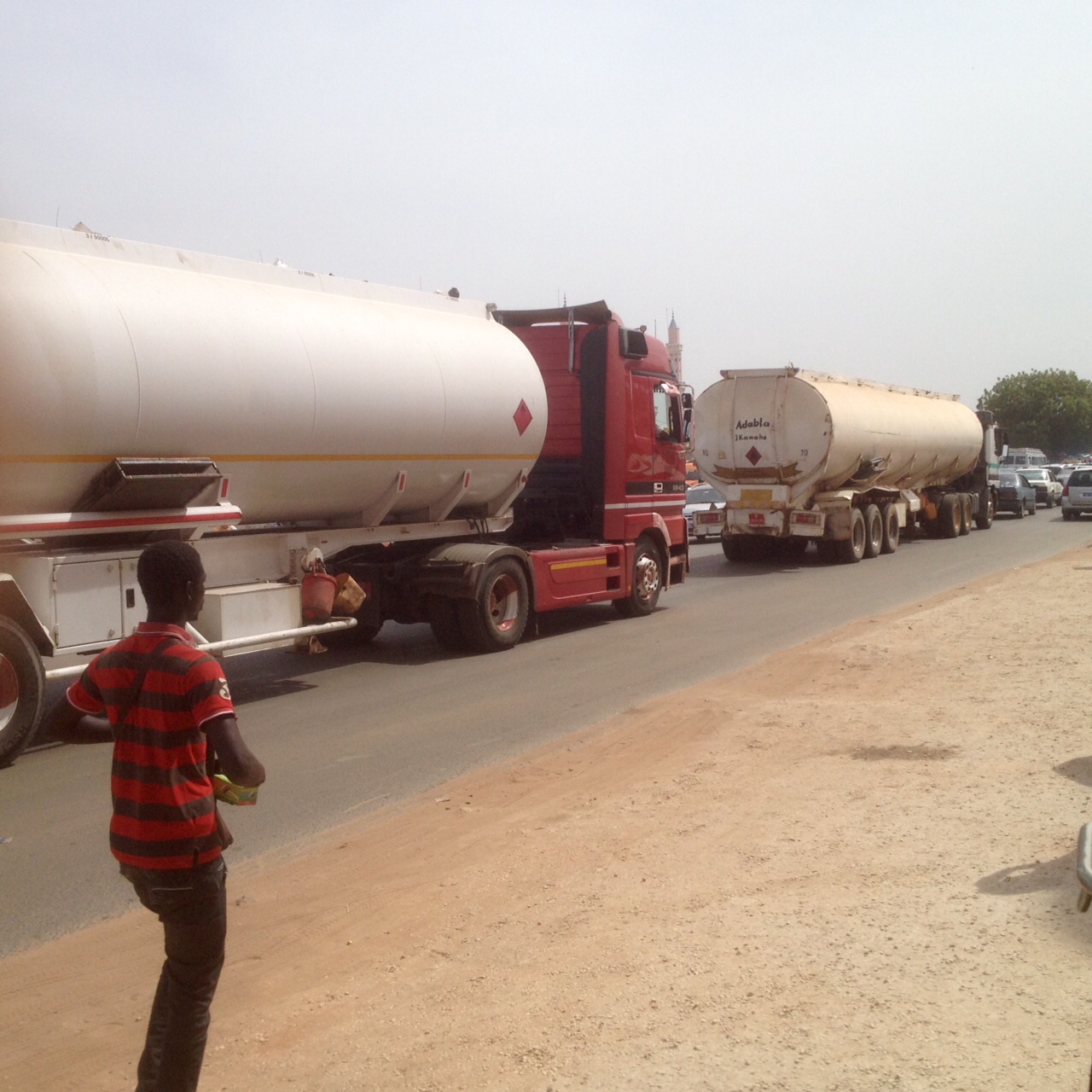
The problems have become more acute in the last few years, and there are massive water tanker trucks that travel around the country trying to supply water where it is needed the most.  Unless something changes, it's kind of a losing battle. 

---------------------------------------------------

Our building projects have made tremendous progress.  I was working to install plumbing in new old house that we are rehabilitating.  It's new to us, but it's a really old colonial French house in need of some serious updating.   The house, like all homes here, is built of bricks and concrete.

So when you need to install pipes in the wall, you hammer out the cement and brick and put the pipes in.  Then eventually, the brick masons come back and patch the sometimes large holes.


---------------------------------------------------- 

We gave also been involved in some serious health post improvements - providing equipment, supplies, and training.  One of our team, Amy, is a career nurse professional.   At the end of one of the seminars, she was invited to observe the birth of a baby, and here she is shown holding the minutes-old baby.  Exciting stuff!


----------------------------------------------------


I've been working with a crew of construction guys in the severe heat - regularly over 100 degrees.  At the end of our efforts, I gave one of the work crew my shoes (his own were in terrible shape).


I got to know these guys pretty good in the last couple weeks.  I'm not sure if "fun" is the right word to use, but it was a rewarding process.  

As we left, he wished us "May you leave in peace, and come back in peace."

We will be back soon.  We've been coming here for many years in the spirit ... of improving the lives of Senegalese in the remote villages.  We like to think we've made a difference. 


Tuesday, December 6, 2016

Eating, Feeding, Heating, and Making History

We've been here in Senegal, West Africa, for over a week now, with a few more days coming.  There is always a lot of activity, and we have been in the village, returned to the city of Dakar, and today will venture back to the bush. 

I will attempt to hit a few highlights of the trip so far:

One of our main projects is a feeding program for the many schools and students in the Keur Soce area.  When we stopped by the school in Lamarame, the ladies were cooking breakfast for the kids.  


The village ladies always manage to look really good, even though many live in grass huts.  They have colorful clothing and head wraps.  The weather is very hot, and cooking like this is not easy.  


We are also working on a renovation of a training center and an old French style colonial house.  We are going to convert this into living space and meeting space for future use.  The work is grueling, but we are making progress.  

The village is remote.  Getting tools and materials there is challenging.  Working in the heat is an endurance test.  Communicating with common language takes a lot of patience.  Never had so much fun!


Once back in Dakar, we made a side trip to a nearby lake, known as Lac Rose for it's pinkish color water.  It is a mellow peaceful place, where they harvest salt from the shallow waters. 


Then yesterday, we went to Goree Island (pronounced Go-Ray) off the coast of Senegal.  It's a place with an emotional impact, where slaves were sent off in the old days to the New World.  


It's important to preserve this part of our global dark past.  We still live with some of the impact many years later.   The picture above shows the "Slave House" where countless people were sold and put onto ships.   

At the same time, the island is a very pleasant place to visit and escape the heat, with some beautiful views of the ocean and the city of Dakar.  We often visit this place on our trips here, especially when we bring a team, like this time. 


Thursday, December 1, 2016

How Deep is YOUR Well? I Bet It's not as Deep as Ours!

Another Blog Post with limited pictures ... sorry, the entire world is not wired yet.  


So  we're sitting here at an internet cafe in Kaolock, Senegal, Africa, and it's one of the few times we've had any access online.  

Most of our time is spent in Keur Soce - a small village several miles away, and it takes a trip to town to do any computer communication.

With that in mind, I have to be brief.  Hence, I will list a few highlights of the last few days.  We arrived after a scary plane flight on Sunday night.  Since then we have experienced a variety of things:

=  We have painted a training center of nearly 5,000 sq ft, with a small team of volunteers.  We're talking top to bottom, floor to ceiling, wall to wall.  In 100 degree heat. Hard work but very rewarding. 

=  Distributed over 200 books, pencils, backpacks, and textbooks in schools that we work with in nearby villages.   In buildings that we built ... through our Andando Foundation.

=  Visited a Health Post Clinic that we rebuilt on Well Baby day, with 30 babies (and moms) in attendance.  Very productive!

=  Stopped in at several Market Gardens we have developed, with hundreds of women working and doing their best to grow organic crops to feed their families, and even sell in the local economy. This is brought about with the help of solar panels that we installed.  

=  Distributed a huge amount of medical supplies that we brought with us to four health posts that we built.


There was a whole lot more, but it sounds like I'm bragging.  Sorry.  But we are proud of the things we've done here, and there is a lot of stuff going on. I look forward to having some time to elaborate in the next few days with some details on current events.  

And frankly, it's not all completely successful.  
There are many challenges.  (That's why we celebrate the good stuff!)  We are having to redirect a major water well project that has cost a lot, and not yet come up with adequate water.  

It's deep but not deep enough.  They are recommending that we go down 150 meters (450 feet! Yikes!)  to get to good water.  There are options ...

Water in this part of the world is hard to come by, and despite our track record of good results, sometimes you have to "readjust" your efforts.  We'll get there, but it takes time.

And it's not all hard work.  We have some fun too.
Thanks for listening.  More to come. 

P.S.  Fiona's arm is still hurting.  Not good.  She is wearing a splint.  You can draw your own conclusions ... we have a professional nurse on our team ... !

Tuesday, November 29, 2016

When Your Plane Feels Like It Will Fall Out of the Sky ....

Sorry, no chance to publish pictures, just a brief update


We are in Senegal, West Africa, spending time here with our Andando Foundation. Left Oregon with a team that started out with a team of eight, but wound up here with only seven. As we tried to check in at the Portland Airport our son Lewis was not allowed on the plane because of “passport issues”.


So the seven of us got on the plane early, early, Friday morning -, flew to New York and then to Dakar Senegal. Lewis had to make an emergency trip to Seattle to straighten out his passport and has not arrived as of yet, today being Tuesday Nov 29th.  But we know he is making progress and on his way.


No blog post would be complete without another airline story. So we’re halfway across the Atlantic and they serve the airplane dinner. As we enjoy the fine cuisine (not), it starts to get bumpy. Then ... all of a sudden .... all of us passengers are shocked and very alarmed when the plane drops a hundred feet in half a second! Everything flies into the air, including most of the food, drinks, and a small child or two. Anything not strapped in hits the ceiling of the aircraft. Real bad feeling.


People start yelling and screaming. Many passengers have not been through this kind of radical turbulence. It is very unnerving. When you experience this rapid plummet from the sky, you begin to wonder if the wings are going to fall off the plane. I’m thinking, if this is bad, then we can turn around and head back to a nearby airport. Then I realize that we are halfway over the Atlantic, probably three hours from land. This is not comforting.


I look back up the aisle of the plane and it is an astonishing view of carnage. Plates of food in the aisle, everybody is soaking wet from all the drinks flying around, and some people are crying. Unreal. And it is still bumpy and the plane is rocking. I’ve lost my appetite.


Eventually, we stabilize and the pilot comes on the intercom to reassure us that they "had not anticipated the choppy conditions". They were apparently as surprised as the rest of us. 

With all the sophisticated equipment they have, they couldn’t see this coming? And then he says, “we are the first flight to come through here, so there were no previous reports of bumpy conditions” - what? Where are we? No one has been through here before us? Are we lost?


The rest of the flight was reasonably smooth, but no one could really relax.


------------------------------------------------------------


We are out in the bush, here in Keur Soce, Senegal. It’s a remote village where we are deeply involved in many development activities. Unfortunately, access to internet is not good, and it might be a few days until I am able to blog again.

We are engaged with our team in a variety of projects, with a focus on a building effort at a new facility.  We worked hard there in the heat all day, and made a lot of progress.  


Fiona was injured in a fall at one of the gardens.  She took a pretty good tumble.  But she's tough and will carry on.  

Another update report will follow in the next few days.