Monday, February 19, 2018

Why are Skeletons so Popular in Mexico? Warning! Bright Colors Ahead!

We've been in Guanajuato for a few days now and have seen many very interesting things, not altogether pleasant, some rather gruesome in fact. 


You see lots of this type of thing, even the skeletons are colorful.


But before we start on the morbid stuff, let's take another look at the color that depicts this country.  Everywhere you look is a color bomb.


This amazing flower pot was at the Mine Display, about three feet in diameter.


Shopping comes with a dazzling display of colors, more skeleton cups!  Be the first one on your block to own one!


Hey, a little natural color here, too


----------------------------------------

First let's take a look at a particular Mexican fascination - with skeletons and dead people and other things that we found somewhat disturbing. 

We went on a local tour, thinking it might cover some highlights of cool things to look at and discover.  Instead, we were treated to a steady diet of torture, death, dismemberment, and other sobering sights. 

For example, the first place we went was called the "Museo de Los Lamentos".  Roughly translated, that means Museum of The Wailing.  It turned out to be a kind of amateur Haunted House.


It showed pictures, images, and models of people before and after misfortune, and they looked like skeletons in the "after" picture.  Pretty grim.  There were even a couple of mummies, supposedly well preserved, but really horrible looking.   

There were several displays of weapons and disease, and war and famine and terror and ghosts, and ... you get the picture.  Not the way you might choose to start the day.  And this was the light stuff, it got a lot worse.  

From there we went to "The Mines" - a restoration of the mines that were operated in this area back in the days of the settlers.  At one time, Guanajuato, the town where we are staying, was a mining capital, with gold, silver, copper and other metals being extracted to great profit.  Our hotel is called the Silver House Hotel.   

There were also some more mummies of dead miners and other folks, also pretty gross.  And we went down into the mine pretty deep and very steep, and were warned ahead of time to be careful, don't slip, and don't get claustrophobic.  Sounds like fun!  


Then to cap it off, we went to another museum called the History of the Inquisition.  If you know anything about that lovely period of time, it was the wonderful Spaniards again, who brutally applied religious standards, and used torture to achieve "compliance".  

It was super weird with hideous life-like replicas of torture devices and dead bodies and skeletons and suffering and horrible treatment of fellow human beings.  And there were little kids on this tour!  Frankly we were horrified by the recreated scenes, and I would never want a little kid to see this.  Man, it was sick!

I didn't even want to include any pictures in this post, it was so disturbing.  It was freakin' ungodly. Man's ability to mistreat man runs pretty deep.  And of course, there were more mummies, preserved in the disgusting manner in which they died.  

We were glad to get out of there.  Can't we see something nice?  How about a good Cathedral? 
Can we stop by an ice cream stand?  Maybe a nice spicy Burrito?  Anything but more dead tortured skeletons?  

And you would never guess what the last stop on the tour was - a visit to the Mummy Museum.   Are you kidding me?  We drew the line and bailed on the tour.  And it was promoted as a taste of the local flavor and sites of Guanajuato!


What does a Country glorify?  Mexico builds statues to Musicians.


Oh well, it is not all bad here.  There are plenty of cool things to look at.   I mentioned earlier that it seems like everyone in Mexico is a musician.  They honor musicians here with statues like the one below.


We also saw another museum and went to the tomb (shown below) of a very famous Mexican singer/songwriter, named José Alfredo Jiménez.  They love this guy, "especially when there's a lot of Tequila around".  (not my words) 


And they honor their writers.   In fact one curious thing around here is the way they love Don Quixote (Key-hoe-tay), you know, the guy who charged at windmills.  There are numerous statues of him, and also Cervantes, the famed author who wrote the book (who was a Spaniard). 


I came across a statue of Don Quixote (they're everywhere)  and did my best to imitate his pose.  Not bad, eh?


-----------------------------------------


Skeletons?


But to circle back to the skeleton thing, Mexicans seem to really enjoy images of the dead.  Not really sure why.   Mexicanos are fun loving and full of life and enjoy music and great food ... and dead people.  

To be fair, they treat it with humor and whimsy.  They have fun with skeletons.  Skulls make popular and colorful art.  Hey, death is part of life, right?  pardon the pun ... 


After looking into this:  It started about a hundred years ago as satire toward the rich upper class.  It expanded to apply to all classes, with an almost friendly, joking approach to death, and the acceptance that we are all going to die, rich or poor.  Mexicans love their skeletons, they have fun with it.  


They also honor their dead, with the Dia de Los Muertos (Day of the Dead) where they celebrate their deceased family members and embrace the afterlife.   

Hey you gotta love these guys.  What a culture!  They celebrate their musicians, and writers, and artists - and they look death in the face and laugh!  


Sunday, February 18, 2018

Mexico = Color - and a whole lotta shakin' goin on! Earthquake!

Mexico is so beautiful - and colorful


We've had a chance to move around in the last few days and experience some of what you might describe as "Old Mexico".  This is the region that has deep history and many colonial buildings and has helped formulate the history of this country.

For example, we spent three days in Morelia (a town I was completely unaware of) up in the mountains in the center of Mexico.  There are many amazing structures, one of which is the Aqueduct.  

This still strong structure was built in the late 1700's (about the time America achieved independence) and stands proud and tall today.


The purpose was to conduct water from the nearby hills to the center of Morelia, a function it served for two hundred years.  


It now bisects the city with parks all around.  In fact, both the city of Morelia, and now Guanajuato, where we are tonight, are full of parks. 


The geography around here is warm and dry with lots of sunshine, and just enough water to grow almost anything.  The numerous parks are green and lush, and these guys love water fountains. 


The cathedral shown below in Morelia is one of the biggest in Latin America and provides a rich backdrop to some of the history that has taken place in that area.  


The Spaniards brought their Catholic religion, and along with it, they developed numerous Universities - the city of Morelia is still known as a center of higher learning.   And along with this learning came revolution to throw off the chains of Spanish domination and establish their own independence. 

----------------------------------------

On our last night in Morelia, there was a big earthquake, we definitely felt it.  Excitement, but not the kind you're looking for.   It was somewhere over 7.2 on the scale.  There was devastation near the coast, about 140 miles away, near the epicenter.  


They view the world through color 


And we have now made our way to the city of Guanajuato, also in the mountains.   It's a vibrant city, full of life.  The colors here are evident in the picture above.  And music is everywhere.  It seems like every Mexican is a musician of some kind (we even saw bagpipes!) and they all love to sing.   

But this place is high up.  Our room here is over 7,200 feet, and you can feel the elevation.  


This is another history filled area.  Indeed the first battle of the Mexican revolutionary war was fought here.   It's built on hills, and you really get huffin' and puffin' walking around. 


One way to get to the top of the hills is to take a funicular, a cable car built into the hill to take you up or down.   The views from the top are spectacular. 
And of course, more churches, and more color. 


And as we walked downtown, there was some kind of race going on, with lots of people everywhere.   I run a lot, but this altitude takes a lot out of you, and I'm glad I wasn't participating in this high altitude run!


And we'll leave here with one last picture in Guanajuato, with another beautiful fountain nestled in the downtown district.  So pleasant. 


Friday, February 16, 2018

Is Mexico Safe? Compared to What?


We've never spent a lot of time in Mexico.  With a lot of journeys all over the world, we somehow bypassed this country to a large extent.  

Mexico is a great place.  We have been here a few days now and already love the people and the land.  There are so many things that are impressive and noteworthy about our southern neighbor.

This is a surprisingly popular place for foreigners to visit.  I've never seen so many Canadians outside of Canada.  And the Americans are thick down here.  

Is it safe here?  Many people ask that question about Mexico.  There are a lot of stories about drugs and violence here.  But we have never felt unsafe for a moment.  The people are wonderful and cheerful and very friendly. 

Like anywhere, you have to use common sense.  Don't go down a dark street late at night.  The same holds true for Chicago, or Portland for that matter.  The people here want a peaceful life.

Of course there is an element of trouble makers like any place.  But that element generally fights among themselves.   We have found the place to be clean and organized and the buses run on time.  Sure, a taxi ride can be a little adventurous, but that's part of the fun. 

It might be a fair question to ask the people here "Is America Safe?"  When we arrived here and stepped off the plane, there was news of yet another hideous shooting at a school in Florida.  The news out of America would frighten many foreigners.  

Yesterday we rode on a five hour bus ride across the outback of Mexico.  It was a modern bus and the roads were good.  My wife and I have been to some pretty dangerous places in our travels, but this is not one of them. 


There are a lot of visitors to Mexico


One big plus is the weather.  It's the middle of February and the temperature is mid 80's with bright sunshine.  Doesn't feel like winter down here.  Although Oregon weather is generally quite mild compared to other places, people from other places want to get away from the snow and cold and enjoy some warmth. 


The economy here seems fairly healthy.  There is a lot of commerce and business taking place, and construction seems to be pretty active.  


We've been in Ixtapa, on the coast, which is a tourist destination with lots of activities and beaches and hotels and restaurants.  And today traveled to the central highlands of Mexico, to Morelia - we are now in Old Mexico.  


There was a serious elevation gain getting here.  From sea level we climbed up and over an 8,000 foot pass, and settled in at around 6,200 feet altitude.  You find yourself a little out of breath.  But the temperature is still in the 70's with bright sunny days and clear blue skies.

Morelia is a colonial town, with many historic buildings from the days of the Spanish "occupation".   In fact, it is a UNESCO World Heritage Site.  There is a magnificent church cathedral on every corner (at least it seems like it). 

What have we been doing?


Looking back at the last week in Ixtapa, we stayed with friends Ken & Mary and others in a nice deluxe beach side condo.  That is not exactly the way we travel a lot of the time.   Generally we tend to rough it, heading to out-of-the-way places. 
But hey, it sure was nice for a few days. 


Our activities included snorkeling, deep sea fishing, boat rides, fine dining every night, numerous dips in the ocean, observing lots of wildlife (Crocodiles and huge Iguanas), parachute hang gliding, whale watching, acrobats swinging in the air 100 feet off the ground - and playing blues harmonica with the local entertainment at the fancy Valentines Dinner. 


And there was a bit of relaxing in there too.  It's almost like a vacation.  We don't often use that word when are moving around.  We like to say we are travelers on a journey.  But chilling on the beach has its value too!

In Morelia we will spend three days and then travel to Guanajuato, San Miguel, and Leon.  We will be taking public transport.  We like to see how the locals live and get off the beaten path.  


Of primary note - the food here is outstanding.  While near the coast, we feasted on seafood and fish everyday.  Everybody loves Mexican food, and this is the heart of it.  


Monday, January 15, 2018

Never Underestimate the Value of a Good Road


We have been blessed to travel a lot in our lives.  We have also made it a priority, meaning that we value travel over many other things.  The operative word is "things".  We try not to accumulate too many things or possessions - we instead focus on the experience of travel and accumulating memories. 

There are a few places we've been to many times over the years.  Chile is one of them.  We've probably been there thirty times since our first trip in 1985.   Another place is Senegal in West Africa.  We have taken on average two trips a year for 23 years.

This gives a vantage point that can track changes over a long period of time.  If you visit a place repeatedly over years and years, you can see the difference taking place. 

In reference to Senegal, where I am writing this blog post, the changes have been enormous.  It's like watching time pass, with barely perceptible developments  


Let's start with Roads:


It's impossible to overstate the importance of proper roads.  With decent roads you have transportation of people and goods.  It makes the economy better, and allows movement of products and services.  Things expand with better roads. 


Senegal has made a commitment to invest in better highways and it has paid off.  The transformation is almost hard to believe.  There are four lane super highways across the desert landscape.  A trip that used to take all day can be made in just a few hours.  

This means farmers can get produce and livestock to distant markets.  You have access to more places, jobs, opportunities, education, and medicine.  You can move around much more easily than ever before.   Good roads make everything a whole lot more efficient. 

As a small example, you can get spare parts for all the machinery that breaks down frequently, and keep the economy running.  Another example of that same concept is that vehicles don't break down as much because of poor roads.  When you say "help is on the way" it means something now. 

If you want to get your economy going and raise the prospects for your people, build better roads.  

Another big change - phone service - meaning cell phones. 


The citizens of Senegal, in West Africa, made a rather big leap in a fairly short time in the last few years.  Almost everyone has a cell phone here these days, and many of them have a smart phone. 

In the past, you had to wait years (or forever) for a land line wire to be strung to your house in a remote area.  Now they have put cell towers all over the country and there is very good coverage in most places.  

They bypassed the entire telephone circuitry system and everything is done wireless these days.  It is not unusual now to see a guy crossing the bush on a donkey cart, talking on his cell phone.  

It can often be rather hilarious.   We were walking through the outback with an old guy in traditional attire, loose clothing, and we heard a sound.  It was his cell phone ringing, and he reached into the fold of his clothes, pulled out his phone and had a conversation, out in the middle of nowhere.   

And they have internet too, which goes hand in hand with the wireless networks.  And because many of the companies here are European or African, the prices are lower and the services are better.  (that's a not too subtle dig at the American carriers, who keep raising their prices and cutting their service)


So it's safe to say that in comparison, they have better cell service in Senegal that in the United States.   This has transformed society in many ways, and people can get in touch with others easily - and keep in touch.  They can send money easily on their cell phones, another area that is more advanced and widespread than the US.

And if you've never had access to the internet and now you well, the possibilities are endless.  That can be both good and bad, but in this case, it's really good.   

There are many other ways that change has come to these developing countries, and we can take a look at more in the future. 

Friday, January 12, 2018

What's Up Doc? Actually, They Don't Have Doctors Around Here ....


Imagine a place where there are no doctors within 50 miles.  And no medicine, and no emergency services.  And no options available to employ against easily preventable diseases. Or basic care to enable babies to be born to healthy mothers and thrive. We have just described rural Senegal in West Africa.


----------------------------------------


In the last few days, we’ve taken a look at how to help those without resources begin to improve their lives. This is the mission of The Andando Foundation. With a few relatively simple solutions, you can put people on the path to healthy lives (and prosperity?).


Initially, it was all about getting water to those who need it. The Andando logo is comprised of ladies carrying water on their head. This strenuous task took as much as two hours a day, to go fetch water from a far away source and carry it all the way back to your house.


That led to the process of where we looked to help them grow food and dramatically improve their nutrition - along with all the benefits that come with it. It might be over simplified to say, but in this sunny land, all you need is water and good seeds and otherwise fundamental instruction to succeed.


Then we looked at how to help them learn and teach their children. If you can feed them at school, you ensure their attendance and enhance the learning environment, and then you can provide them with low cost and efficient classroom facilities.


These are important first steps. There is another big factor in quality of life that is in short supply in much of Africa - proper medical care.


Once you start to meet basic needs, you can proceed up the ladder to something a bit more sophisticated. Health care is often a challenge - look at the hurdles and high cost in our own country of America. But just getting started is a big step, and there are feasible things that can be done, often at low cost. 


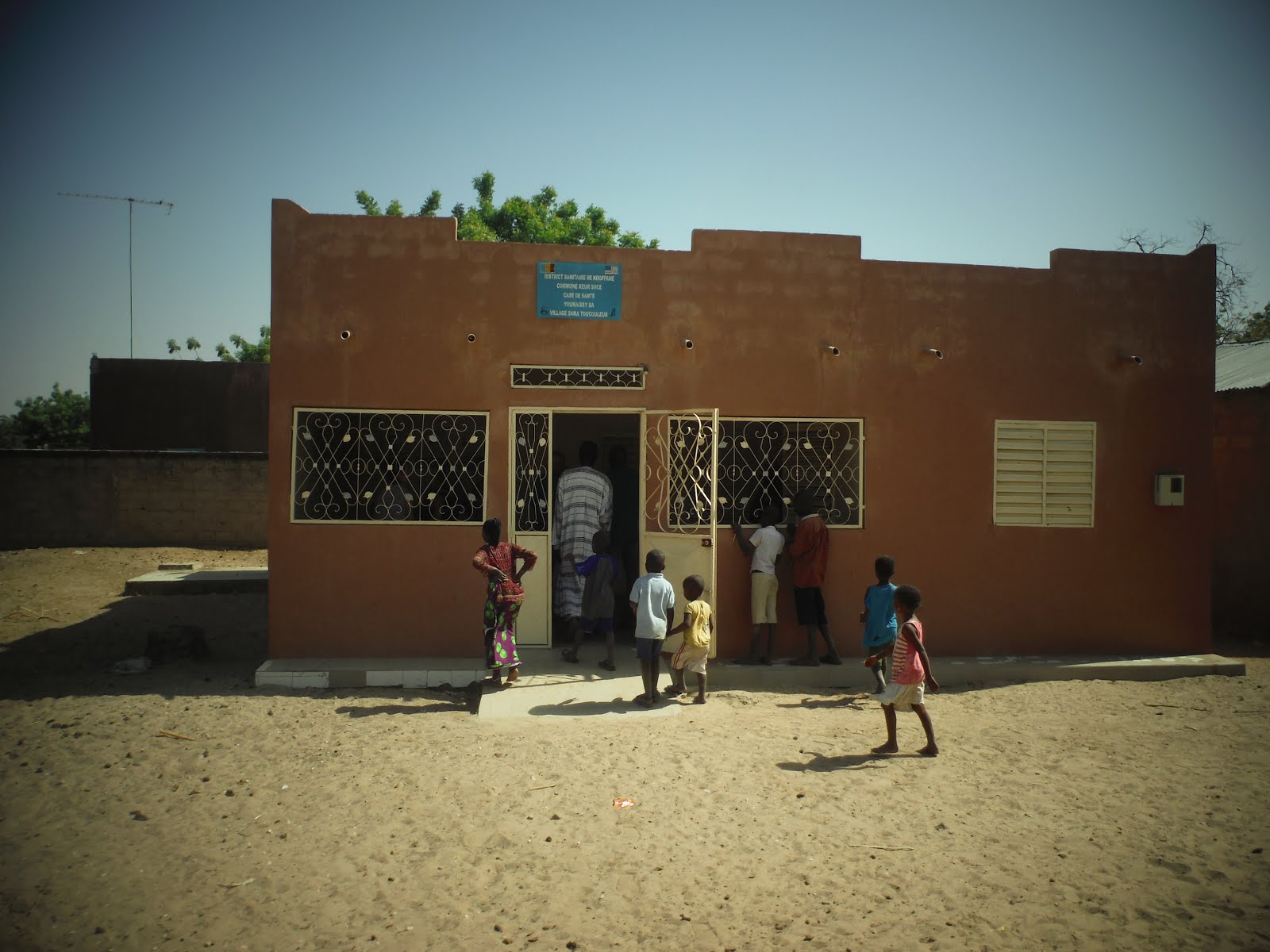
For example, in these remote villages, you need a facility to offer clean, hygienic care, and keep medicine secure, and put this in easy walking distance for the local citizens. If the best place (or only place) to birth a baby is a five hour donkey cart ride, then you are going to have problems.


For a few years now, through Andando, we have built what are called Health Posts in far off villages in the bush. A better description for an outside audience would be Health Clinic. Again, for a small fraction of what a medical facilty would cost in the “modern” world, you can offer life saving medical care.


The best way to treat a disease if prevent it from ever starting. With proper pre-natal care for expecting mothers, and proper care for babies once they are born, you can solve a whole lot of problems before they happen.


And running water and proper sanitary facilities makes a huge difference. You need to teach people that proper health means keeping clean and washing your hands and avoiding contact with germs.

And even having simple medicines on hand can eradicate persistent problems like diarrhea, or rural parasites and other nagging problems. So much of medical care means educating people of what causes illness and how to treat it, or better yet, prevent it.


But you have to get a facility established. One of the challenges is getting qualified staff a place to practice medicine. Once a Health Clinic is built, the government and local authorities are much more like to provide a proper nurse or medical professional. And medicine, drugs, and even proper things like bandages follow.


We have made solid strides to get health facilities in place. There is a lot more to do. 


One of our own crew, demonstrating the weight scale ...


A positive success story:


These local folks are rather fertile, and there are a lot of babies born around here. But there have always been problems and challenges. Now those problems can be addressed. 


Since we have gained a lot of ground (pardon the pun) with our gardens, nutrition and food security has sky rocketed. People are eating much more healthy organic food. The result of this has seen an increase in twin babies being born. In fact, there has been a noticeable “boom” in twins!


In the past, underweight babies have struggled to survive.  But now, the babies are born to healthy mothers and are maintaining good weight gain.  We know this because we measure their weight, (picture above) and they are thriving, even as they come two at a time!

Tuesday, January 9, 2018

Did You Learn Anything Today?

It is beyond the scope of this blog to examine a world without education.  It is so important to learn even the basic things like reading and writing.   Without proper education, you are going to learn (or not learn) the hard way.


"Without the education of people, a society cannot flourish or grow because it does not have the knowledge to build and maintain the society."


-----------------------------------------

In review, with the help of Andando, the village of Keur Soce has water and gardens and nutrition and a way to make a little income.  We want to enable them to meet the needs of today.  

What about the future?  What about the children?  How can we improve their prospects for a brighter day ahead?

In this remote place, they do have schools, but it's a struggle to provide quality education without any resources.   

One of the problems is that kids often don't show up at school. And if the kids don’t come to school they will never learn much.   If they show up hungry, they are not focused and they lack motivation.  If you can feed them, it is a proven encouragement for them to show up.  

And if they show up, they learn.  

We started a feeding program.  It was simple - or the goal was to make it simple and keep it simple.  We came up with a recipe of simple porridge, made of rice, peanuts, millet, corn, and beans.  It is very easy to make and is very nutritious.   And easy to serve.  


The local ladies and moms cook it each morning (at the school) and the kids have food to start their day. They are fed and eager to learn.  And it works.  Attendance improved and test scores went up and the schools got more crowded.   

And then we needed more schools.  

So we built them.  Keep in mind, the government is not responsive in this remote corner of the country.  They don’t have resources (or choose to deploy them elsewhere).  Some of the schools or “classrooms”  actually meet in a grass hut.  The learning environment can be brutal.  So we rolled up our sleeves and started building classrooms.   This is not quite as hard as it might seem.  

The design is very basic and is pretty much uniform.  You just have to get the process down and repeat it.  We have a builder who is good and efficient, and once you get the ball rolling, you can get a lot done.  We have built 30 classrooms so far.

It costs us around $6,000 for a classroom.  A classroom in America probably costs what, $200,000?   The Andando Foundation is a very lean organization and we can get a lot of bang for the buck.  So if you do the math, we have built 30 classrooms for less than the cost of one in the United States.   


The world is changing faster these days, and you need education to compete.  Heck, you need an education to operate a smartphone.  If you can’t read, you’re gonna get left behind.  If we can help, we’re going to do our best.

For example, most school kids in Senegal don’t know much about geography.   So we painted murals of the world on large outside walls.  They can see that other lands are far away.  Funny thing, when they see Senegal on a world map, they often say “It’s so small!”  

To summarize:

Get ‘em fed
Get ‘em to School
Teach ‘em how to read and do some math.
Teach ‘em about geography and teach ‘em a foreign language, you know, the stuff we teach in the United States ... oh, wait, what?


Saturday, January 6, 2018

Is This Place a Desert? All you need is Water ...


This place is a desert.  The annual rainfall in Senegal is 10 inches, compared to Oregon which this year had almost 50 inches.  To put that in perspective, the monthly record for rainfall in Portland is 13.52 inches.  That would be a year and four months in Senegal.

However, the ground here in Senegal is pretty fertile.  If you add water, then you can grow stuff here.  In fact, you can grow almost anything.  You just have to get water to it. 

The water does not come out of the sky.  But surprisingly it’s in the ground, if you drill down for it.   Or actually, the best way is to dig for it.  Like send guys down into a really deep hole till they hit water.   The deepest hand dug well is 50 meters - which equals 164 feet.  

The diggers are lowered into the well with a rope, and they dig with a shovel, and the guys on the surface pull up the dirt in a five gallon bucket.  Obviously it takes a long time to dig a well, but the good news is - it lasts for a long time.  A good hand dug well should last an average of 50 years.

But hold on!  Before you head out with a shovel and a five gallon bucket, you need to know where to dig.  There’s water down there, but ... where?  So there are special people here who, well, they just know.   
They walk around and look for tell-tale signs, such as certain plants, or lack thereof.  They are pretty much always right.  

And once you hit water - life changes.  Water in the desert is like magic.  However, there are still some challenging ingredients.  

For example, how do you get water up out of the well?   By hand?  It’s down there 164 feet!  Pulling up a bucket of water from that deep is hard.  A full five gallon bucket weighs about 40 pounds.
You will eventually have arms like Popeye, if you last that long.  There must be a better way.  

How about a little help here?  Can somebody help me get this water out of a really deep hole? It’s not like we have electricity or anything.  We’re in the middle of a remote desert.  Heck, I’m gonna burn 500 calories just pulling on a dang rope.   

Tell you what, how about we put a pump on it and bring the water up?   And while we're at it, let's put a solar power system in place to run the pump and take advantage of all that bright sunshine.  After that when we get the water up out of the well, let's store it in a big tank, about ten feet up above the ground. 


That way we can use the water any time we want, without power, because gravity comes into play and the water drains out of the tank.  So we can distribute the water throughout a garden at all the right spots. 

And stuff grows.  And since it's the tropics, there are no seasons, so stuff grows year round.  

All this means that with a little bit of advice and assistance, people in a remote village can thrive, at least in terms of growing healthy food with good nutrition.  And then other good things happen, which we will talk about next time.  

Tuesday, January 2, 2018

They Didn't Used to Have a Lot to Do

This time last year, way back in 2017, found us in Tierra del Fuego, at the southernmost tip of South America.  Over the next three months, we made our way home traveling overland, through eleven countries.  

This year, at least as far as it goes, is not shaping up to be quite as ambitious.  However, we tend to find our way to other lands on a regular basis.  

Take today for example.  As I write this, we are in JFK Airport in New York, on a stop over to our flight to Dakar Senegal.  We go there on a regular basis, on behalf of our Andando Foundation, doing work to benefit those with few opportunities.  


On this trip we are joined by our friends, Scotty & Crystal, who are long time supporters of Andando and have done many good things in Senegal.  They lived there for a year in 2009.

Our trip will consist of around fourteen days, with several stops in different villages.  The Andando effort has really expanded greatly into many more programs, locations, and projects.  We hope this continues.  

One interesting aspect of this trip is that we will arrive a few days ahead of our son Lewis and his wife Ruby, and their infant son (and our grandson) Sullivan.  They are moving to Senegal for three months.   We hope to assist them with settling in.  They have a full slate of activities and work to do, mostly in a town called Keur Soce.  

This is a village that we have been involved with for many years.  With a targeted focus we have chosen to sink some roots into this local area with the purpose of providing development aid.   In the past, we (like a lot of other organizations) were somewhat prone toward a wide distribution of effort.  We have seen big benefits from reinforcing our resources in this place. 


One of the priorities of this trip is to continue the remodel of our newest facility in Keur Soce, a place we call the French House.  We refer to it that way because it once was ... a French house.  The country of Senegal was a colony of France for many years, before achieving "independence".
Because of our work in the area, the local municipality granted us the open ended use of the house and property and the land.  

There is a big garden there now - that's what we do - and a solar well system, along with a large training facility.


There are not a lot of jobs in Senegal.  The country is just now beginning to show progress toward becoming an "emerging nation".
The citizens of Kuer Soce - and many other parts of Senegal - often don't have a lot to do.  They scratch by getting just enough to eat and keep a roof over their heads.

But with the help of Andando, they now have a purpose and can take some control over their food supply and even generate some earnings.  It's very gratifying to help be a part of this. 


Sunday, November 19, 2017

Want to Make History? Here's How ...In Five Easy Steps


Looking back on our recent trip to Scotland and England, one of the things that make it so enjoyable is the place is dripping with history.  

Around every corner is some major historical site.  You can't escape the days of old.  Even beyond old, like ancient.  

So as a bit of review, I wanted to look back at how history is made.  I have a brief list here to illustrate a few key points.   If your goal is to make history, follow some of these pointers. 


Start Early 


When we visited the Roman Ruins in Bath England, I casually mentioned that they go back several hundred years.  Fiona corrected me on this - it's more like two thousand years.   

The Romans showed up in Great Britain (it wasn't called that at the time) around 55BC when Julius Caesar invaded the place and named it Britannia.  He and his army defeated the Picts and Celts and made a settlement in southwest England near a bend in the River Avon because of the hot springs there.  The town became known as Bath.  The rest is history (sorry, couldn't resist)


On our trip, we visited several churches that are hundreds of years old.  In fact, many of the old churches are a thousand years old.   An historic house we visited was originally built circa 1290.  The lineage of the royal families goes back hundreds of years.  Heck, the ruins at Stonehenge? - originally built 5,000 years ago.  

This is part of how history is made.  The best way to make history is to start really early on, and try to make it last.  That way, people will wonder about it a thousand years later. 


Do something significant ... like discover something


The Dictionary defines History as: A chronological record of significant events often including an explanation of their causes.

History is a record of people who set records, or discovered things, or invented things.   Take Sir Isaac Newton, the guy who discovered gravity.  Actually he didn't "discover" it, he just recognized its existence.

You come across this stuff often completely unaware that it even exists.  For example, I was jogging one morning in Jedburgh Scotland and I came across these displays in a park telling us about James Hutton, the Father of Geology.  Who's this? I thought.  


He was a "scientist" about three or four hundred years ago who was pondering the nature of a river bank.  It had sedimentary rock, which was not only level, but shot up in a perpendicular fashion.  Sedimentary layers were rather easy to explain, but what made those same rocks vertical?  The ancient forces of the earth's moving crust.  Over breakfast with our traveling group of relatives, I described the guy as the Father of Rocks.  

And no mention of history would be complete without recognizing Jesus as a powerful figure.  Regardless of your religious orientation or avoidance thereof, you can't deny that Jesus was significant.  He influenced history.  For Christ's sake, we even define our year by his birth, either before (BC) or after (2017).


Build things out of stone


I mentioned this before in a blog post.  If you want a building or structure to go down in history, build it out of stone.  A well built castle will last a really long time, like 1,500 years or more.  


Look at the Pyramids of Egypt, there were built sometime in the year 2,500 BC.  And they're still holding up pretty good.  


And nothing beats a nice castle to hold up to the elements if it's built right.    


 People build stuff out of the available materials where they live.  In much of Europe, the available material is stone, or marble, and it lasts a long time.  In the Pacific Northwest, where we live, the abundant building material is wood, and historically speaking it doesn't last very long.  

And in Senegal, West Africa, where we are active with our Andando Foundation, the only abundant material is sand.  So they make buildings out of a sand and a little cement, into cinder blocks, or an adobe type substance.  But it doesn't really last long, especially if it rains much. 

If you build something out of real stone in the dry desert, it's gonna last a really long time.  


We know about the ancient Mayans and Incas in Central and South America because they built magnificent fortresses out of rock.  They were good at it, and those edifices still stand today. 


Write it down


During our recent trip, we visited the home of two of the most famous literary figures in history.  Certainly for the English speaking world.  The reason they are still known today is that they wrote stuff down.  Just talking is not going to get you anywhere.  If you have something to say, put it on paper.   

Or in the case of really ancient writings, carve it in stone.  See rule number two above.  Or paint it on the inside of a cave wall.   Or better yet, carve it into the desert floor, as in the Nazca Lines in Peru (below), visible from the air. 


In our trip to the UK, we spent time near the home of William Shakespeare, at Stratford-upon-Avon.  His impact on the written word is unmistakeable.  So much of our literary culture is influenced by his plays. Even if you don't understand how he says things (I don't), you can't deny his importance.  

And Sir Walter Scott was also a famous and prolific writer living in Scotland.  He basically invented the modern day Novel.  Prior to his books, most of the written word was prose or poetry or verse or song, etc.   He gave us Robin Hood and Ivanhoe and Rob Roy and the Lord of the Isles and almost countless other written words. 


Fight a War


A War is a surefire way to make history.  Hey, you don't even have to win.  In fact, the worse the carnage, the greater the history.  I don't mean to make light of war, it's the worst method to use if you want to make history.  


But think about it.  The reason we know about many of the most famous people in history is because of War.  The more battles the better. 

Or still better yet, go off and conquer a major geographic region.  Alexander the Great (what a cool name, he wasn't just "above average") was a Greek who conquered most of the known world back in his day.  He built the greatest empire the world has ever seen.  


Genghis Khan was no slouch either.  We went to Kazakstan last year (click this wish you were here), and that place has his name written all over it.  Mr Khan's conquest included incredibly vast territories reaching from what is modern day Korea to Poland to Syria to Vietnam.  
He was so ruthless and feared that when people heard he was coming - rather than face his wrath - they marched out and surrendered, or even killed themselves, to save him the trouble.

There are statues and monuments built to great soldiers and battles of the past.  In fact, it seems like we celebrate this part of history more than others.  When we were in Scotland, there was a monument to William Wallace around every corner (like the one at the top of this blog).  He was the knight who defeated the English at the Battle of Sterling in 1297, bringing about Scottish independence.  He was made famous to a modern audience and rest of the world by the movie Braveheart.  

The history making technique of war goes back to the beginning of civilization, with people like Spartacus, Attila the Hun, and Charlemagne.  However, this method is the most costly in terms of misery and loss of life.  Not recommended. 

So there you have it, my top five ways to make history.  In a nutshell:  Start Early, Discover It, Build It, Write It, and Kill It (or at least fight about it).