Tuesday, January 15, 2019

Every Restaurant Needs One of These - And Other Travel Pictures

Okay, we are now in Chile, after our first-time visit to Bolivia.  A lot has happened in the last couple days, and I thought it might be best so show it with a few pictures. 

I'll give a caption under each picture to describe what it is - or give a potentially witty comment.


Above:  Hey, shouldn't every restaurant have a three thousand pound cannon amongst the tables?  I would personally not want it pointed at me.  I think I would find it uncomfortable and difficult to enjoy my meal ... however, if you got a chunk of food stuck in your teeth, you could always flick it into the barrel of the cannon ... just sayin'

So the above picture was taken in Valparaiso Chile, where we are tonight.  


But let's get the chronology correct, and finish up our time in Bolivia:  


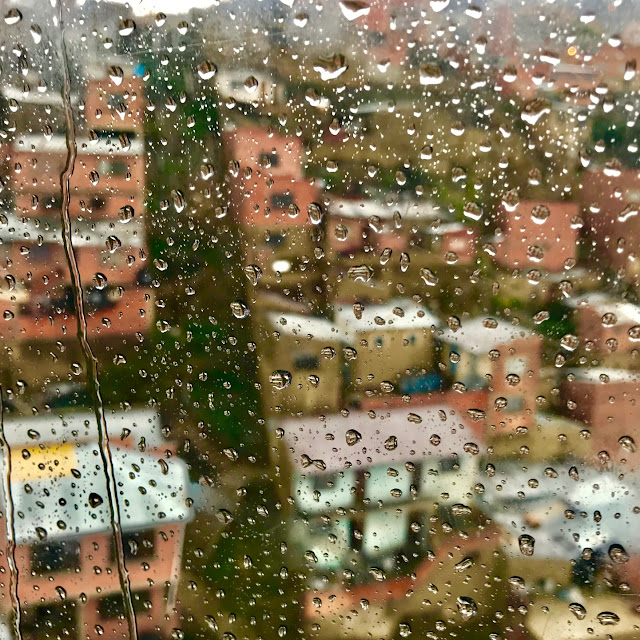
Above:  Even though the elevation of La Paz, Bolivia is pretty much insane, their "rapid transit" system is a whole bunch of cable cars suspended over the city.  Rather ingenious if you ask me. But the day we decided to explore the skyway it started raining, resulting in this picture of raindrops set against the city below. 


So the clouds parted long enough to capture a view of the city as a cable car sped by.  They move pretty fast, so I had to be on target with the photo.  La Paz is completely built on hills, and did I mention that we were constantly out of breath?  (okay, I suppose I did, but it's around 13,000 feet high)


The women of Bolivia wear the big traditional skirt thing, along with variety of hats.  It's apparently a status symbol.  We saw a few of them doing something like singing, with one of their fans watching.  


Latin Americans of all nations love a party, or celebration, or fiesta - you name it and there's a bunch of people ready to have a good time together.  Usually including a variety of loud fireworks and music well into the night (and okay, maybe a little drinking).  This picture above shows a big crowd in the center of La Paz ... in between the rain showers.


This picture above is at the Catholic Monastery Cloister in the center of La Paz.  It was a very beautiful, dignified, and solemn place (except for the noisy fiesta outside).  It was started by the order of the Franciscans in 1632.


Among the many historical buildings in La Paz, this place was an aesthetically pleasing photo opportunity of the house of the revolutionary leader who helped Bolivia achieve independence from Spain in 1825.  They were aided by Simon Bolivar, after whom the country is named. 


Okay, on to Chile!


The above picture was taken from our hotel room window.  We are back at sea level, and you can see the bay behind the clock tower.  We are in Valparaiso, right on the Pacific Ocean, and we can fill our lungs with the lovely abundant ocean air.  Did I mention that people in Bolivia live way up in the clouds?  Sorry ... It's sunny and warm here in Valpo!


What, another glam shoot?  Just outside our hotel in Valparaiso, they were taking pictures of beautiful women, just like in Mexico ( Lovely woman in Mexico ).  It's summer here and the flowers are out and it was a perfect day for photos.  


Not far from our hotel is a wrought iron fence with a view of the city below.  Love locks are a "thing".  Many places have a location similar to this, where couples put a padlock in place - and throw away the key, to symbolize their unbroken love bond.  Valparaiso is no exception.  


We've actually been to Valparaiso before.  In fact I think I might have referenced this statue before, it's one of my favorites.  Indeed I have a new caption:  "Come any closer bird and I shall chop you to bits with my sword!"  


Among other things, Valparaiso is an artist colony like few others in the world.  It seems like every available surface is covered with art, including this ten story building pictured above.   I couldn't resist taking a picture.  To me, it looks like the neck of a guitar ... 


Some of the artwork is simply amazing.  This animated wall art is about twenty five feet tall and extremely well done.  What a great place to visit.  We loved it so much the first time here that we came back.

--------------------------------------

And one final picture below:  It's Fiona standing in front of a fantastic and intense wall painting with a vast array of images.  She's just ever-so-slightly enchanted, and maybe even a little enthralled ....


Sunday, January 13, 2019

Most People Giggle When They Hear the Name ... But It's Magnificent

In the last blog post (and first one of this long journey), I asked a question and gave a somewhat flippant answer.  Okay, maybe I wasn't entirely honest about the motivation to visit Bolivia (because it's there!) - because there is a particular place that I've always wanted to see. 


It's one of the more unusual names for a place, indeed it's a Lake, and like most things in Bolivia, it's at very high altitude.  

In fact, I won't tell you the name until I tell you some things about it.  
1. It's the highest lake in the world.  There is no other valid body of water that high anywhere.
2. It covers over 3,280 square miles, nearly the size of Puerto Rico.
3. Half the lake is in Bolivia and half in Peru.
4. It's over 3 million years old and was formed by an earthquake that split the Andes Mountains.
5. The Inca people called it "the cradle of life"


You're gonna giggle when you hear the name -

Titicaca


It's pronounced like you might think.  Titi: looks like and rhymes with a certain word similar to "kitty" ... and Caca: which sounds just like a Spanish word for poop. 

In fact the name comes from two words: Titi is an ancient word for Puma or Jaguar - and caca means rock, or mountain.  So the name roughly translated means Puma Mountain. 

I have always been fascinated with the lake and always wanted to visit the place, which is the origination of the vast Incan Empire.  It has floating islands.  It is one of twenty ancient lakes on earth and is a UNESCO world heritage site. 


Our Day on Titicaca


We set out early from the capital of La Paz Bolivia, still suffering from the effects of the high altitude.  It takes a while to get used to this.  Most of the day was spent at 14,000 feet.   


The bus ride was long and arduous.  The roads were okay, but it's a long winding way over the mountains and there are a few unexpected things.  For example: we had to cross a narrow stretch of land which where the lake runs between it.  But there was no bridge.  

So they unload all the passengers and we cross on a lightweight ferry, and then they send the bus over, also on a light weight ferry.  The whole thing did not inspire confidence.  We all loaded back on the bus and continued on our way.  


We finally arrived at our destination, the wonderful town on the lake called Copacabana.  It was a surprising delight.  The day was sunny and a "warm" 54 degrees which is fairly nice for these regions.  It's always pretty cold at 14,000 feet.  

We toured the town before our upcoming boat ride and had a delicious lunch at an outdoor restaurant on the lake, of what they called trout, but turned out to be Salmon!  And we toured a historic church built in 1548.  It is such a remote place to have a 471 year old cathedral.  


We then set out on a small launch on the lake on our way to Isla del Sol (Island of the Sun).  It took about an hour to get there.  The enormous lake is filled with spectacular views - and the island is filled with Inca ruins.  


There was an option to hike a trail over the hills from our first boat stop to our second.  I was the only one of the twenty three people on our boat to take that offer.  Maybe everyone else had more sense.  It's not easy at that elevation.  Hey I'm a pretty fit dude, I've been running every day for most of my life.  But more than once I bent over with my hands on my knees to catch my breath.


Several times, while hiking over the rocky hills, I passed Inca ruins.  At couple times I just stopped and sat on a rock, gazing out as the vast inland body of water, soaking in the view (pardon the pun).  It was amazing.  It was one of those moments when you travel and you ultimately reach a destination and you sit and wonder, "wow, I can't believe I'm here ..."


I descended into the small unspoiled town village on the other side.  It was remote and peaceful.  The locals make a living mostly from fishing.  The lakeside inhabitants build boats out of straw from the lakes edge.  In fact they build large platforms that become larger and eventually, floating islands that they live on.  

They also do a lot of knitting, using wool or Llama or Alpaca, like the one in the picture below.


The boat was there and Fiona was glad I showed up.  We made our way back with fewer passengers, as some of the first batch stayed behind to backpack and camp.  It was getting toward the end of the day by then, and the sunset was unforgettable.  


One last moment of unusual circumstance.  When we left the town of Copacabana on the bus, it was getting dark and there were several who had just arrived via transfer bus from Peru.  

They had no idea of what the road was like and after some time we stopped and everybody had to get off the bus and take the ferry in a reverse of our outbound trip.  They were confused but went along with the highly unusual process.  It was almost funny but also rather frightening to see them load vehicles on the crude floating barges to cross the lake - in the dark.  


Crazy stuff in amazing places.  Now, if I could just catch my breath.   


Thursday, January 10, 2019

This Seems Like a Good Place to Start - Another semi-epic journey


After a while, we just get restless.  Then we plan, then we buy tickets, and then we leave ...


It's another Round The World trip, and we're already a week into it.   Fiona and I love to travel - there is so much to see and do.  Is it too much of a cliche to say "It's a big wide world out there"?

This adventure has a bit of a twist, we are going around the world in the Southern Hemisphere.  This is a challenge because 80% of the world's land mass is in the Northern Hemisphere.  And 
88% of the world's population is north of the equator.  

But we have plotted a course and we are on our way ...  and oh yeah, another thing, this time of year it's summer down south!

First Stop - Mexico 

Okay, I know Mexico is not south of the equator, but it's where our close friends Jeff and Angela live with their three kids.  We were invited on our way down south to spend a few days with them in Puerto Vallarta, and so that's where our trip began.

And if you want to get out of the Oregon winter, Mexico is a good place to start.  And we weren't disappointed.  Lots of warm sunshine and sandy beaches.  

Must be the season for dramatic beach photos, there were others too!


This is a place you can enjoy the food, the music, the weather, the ocean, and of course good friendship.   The flowers and plant life and also outstanding.  It was a wonderful time.   


And Now - we are in Bolivia! 


The itinerary calls for a direct route down into South America, a place we know well - except for the country of Bolivia.  There was a time on another trip (click here: earlier no-go on Bolivia) when we could not get into the country, and it took another heroic effort, but this time we made it.


Why are we so dead set on getting to this country?  Well, easy answer, because it's there!  We have hit almost everywhere else in South and Central America and this is one spot on the map that we (up to this point) have missed. 

We flew from Puerto Vallarta to Mexico City and had to spend the night in an airport hotel to catch the early morning flight the next day to Lima, Peru.  Then after a layover, on to La Paz, Bolivia.  

The only problem with that?  It arrives at 1:30 in the morning.  After the usual immigration and customs we walked out with our bags ... looking for the taxi ... that we were told would be waiting for us.  But ... no taxi.  

----------------------------------------

Permit me to interrupt myself here and point out a dramatic fact about La Paz Bolivia.  It's the highest capital in the world and, before the jokes start, we're talking altitude - it's over 12,000 feet high!   That's quite a bit higher than the peak of Oregon's Mount Hood!   

And boy did we feel it.  The moment we walked off the plane we felt light headed.  It was very unpleasant and it got worse; we couldn't focus, and every step left us gasping for air!  I was surprised how much it affected us.  There was no adjustment, just boom, you're 2.3 miles up! 

-----------------------------------------

So back to the story, we had to negotiate with another taxi guy who would take US dollars, and by the time we made it to the hotel it was 3:00 in the morning.  We were dazed and confused.  The altitude thing just hammered us.  And even this morning when we woke up (too early) we had bad headaches and we very disoriented.  Not fun.

The good news:  after breakfast we took a bunch of extra strength Tylenol, Aleve, Ibuprofen, and whatever else we could get our hands on, and went back to sleep.  We totally crashed.  

It helped a lot, and we were able to make it through the day.   But it's a fact of life that you need to adjust to high altitude, and you don't function at your best until you get used to it.  

What a way to start a long adventure!

----------------------------------------

As usual, there are lots of sights and sounds that ignite your imagination, especially if they're weird.  Below are a couple examples:

This is the typical garb that the older Bolivian ladies wear.  This particular one happened to be sitting in a cardboard box with a puzzling sign.  


And this has to be one of the more unusual statues I've ever seen.  I couldn't figure out what they are celebrating ...


Friday, August 10, 2018

It's Not A Secret, It's Just Off The Beaten Path


When we travel, we like to get off the beaten path.  Indeed, my wife Fiona was born in a place off the "beaten path".  There are a surprising number of things to do in places that are off the beaten path. 
They are not hidden, but can be difficult to find, which makes them a little more enjoyable. 


The last few days on the Isle of Lewis, in the remote northwest of Scotland, have been full of activities and things to see.  In the main city of Stornoway, there is a big impressive castle on a hill overlooking the town.  It's just been renovated, and includes a nice museum.  


And the history of this place runs deep, clear back to the days of Stonehenge.  In fact, there are the Standing Stones of Callanish on a remote hilltop near the Atlantic Ocean.  It's an amazing place; the setting adds to the atmosphere.  Some of the stones are twenty feet high. 

How did the stones get here?  Who erected this puzzling arrangement?  Why did they do it and what does it represent?  After much study and research, these questions remain unanswered.  There are some ideas on who, what, and why, but nobody really knows ...


And how did these fine folks live?


So, what was life like for the early Scots in the old days?  Well, you can see for yourself as it's preserved in many restored sites.  Life was harsh back then, but somehow those folks stuck around, and even today that region remains a rugged and challenging environment.  


I was fiddling around with this picture and added the text graphic, it looks like a brochure cover!


They built most things out of stone so we have evidence of their lifestyle.   It's a rocky island so there are plenty of building materials.  It takes a lot of careful effort to build like this, but once done, the structures last for centuries.  


And for all its tough appearances, there are places of beauty and tranquility all around.   The Castle Grounds is a great place to hike, with a variety of trees and the Creed River running through it.  The brown color of the water comes from peat, an almost coal-like soil that gives Scotch Whisky it's distinctive color flavor. 


They even burn peat in their fireplaces, like coal, to heat their houses.  It gives a very identifiable smell that reminds Fiona of "home".   


This trip was a special treat for Fiona because two of our grandees were along to see how and where she grew up. 


A person might wonder, while walking around these ancient ruins and castles of old, how would we preserve our own history?  Will people in the distant future be puzzled by our buildings and formations?  

Will we take care to honor the past?  Or is it more like what happens in reality ... a farmer, plowing his field, hits a rock and wonders how that rock got there, and the archaeologists show up and identify a "prehistoric" civilizations that did this - so long ago we can't even explain why?

---------------------------

Oh, and one last thing - the these islands are known for their connection to the production of Scotch Whisky, as mentioned above.  We took a tour of one distillery, (that also makes the top notch Harris Gin), and they have Whisky in barrels aging for release in a few more years.  All Scotch Whisky is aged, and has to come from Scotland.  One such barrel, or cask, is shown below, with the owners name on it. 


Sunday, August 5, 2018

How Far Away is Home? It Depends ....

We passed through Inverness on our way here, it's at the north end of Loch Ness, you know, where the monster lives ...


 -----


We have traveled on from Aberdeen Scotland to another place in the last couple days.  The journey included in sequence: a long walk, a bus ride, train ride, bus ride, an ocean going boat, and a car.


The weather was nice when we left Aberdeen.


 ---


What is the destination worthy of that effort?  None other than the Isle of Lewis, off the north west coast of Scotland.  It's where Fiona comes from and much of her family still lives. 


You see, Fiona was born and raised on the Isle of Lewis, in the Outer Hebrides (pronounce Heb-rid-dees).  She left home to go to college where we met, in Aberdeen.  

One of the goals of this trip was to see the fam, you know, the rellies, the Scottish side of our family tree.  There are a bunch over here.  And to top that off, on the boat, we connected with our daughter Alison, and her clan (Husband Brandon, and boys, Jackson and Sam).   They are here visiting as well.  

The roots run deep here on this Island, much of it in and around the main town of Stornoway.  Fiona's brother Duncan and his wife Donna and family live here, along with a few other apples that didn't fall far from the tree.  

The fact is, these are a bunch of wonderful people, we love 'em, and today we had a wonderful foodfest with all of 'em.  


We expected mixed weather and this is what we got.  Today was almost like a winter day in Oregon, rainy, windy, wet, foggy, and a bit cold.  
What a change from the last few hot sunny days.


There are several places we will see in the next week.  We're just getting used to the time change and so forth, but we are ready to go!

------------------------------------- 

In the meantime, on the train yesterday, we came across a wild bunch on a "hen party" - like a bachelor party for girls.  They were having a rowdy time on the train and they had an inflatable doll - it was a male and it was, ahem, anatomically correct.   I had to be careful with the picture, I could only show the back side!  


Friday, August 3, 2018

Granite Countertops? How About a Whole City of Granite?

A reflection from a pond in one of the beautiful parks in Aberdeen. 


Aberdeen Scotland - The Granite City


Fiona and I find ourselves today in Aberdeen, on the north east coast of Scotland, sitting right on the North Sea.  This place used to be booming, but has hit some harder times recently, as the price of oil has dipped.  

In fact, the original oil boom of the early 1970's brought me to this city as a young lad in search of work (more below).  It is here that I met my wife Fiona, and we've come back to spend a couple days here revisiting our old stomping grounds. 


The City


For over 300 years, granite quarried from the nearby hills supplied the building material for the growing city of Aberdeen.  Although gray in appearance, this particular granite has a high concentration of mica silicate, which can make it sparkle in the sunlight.  

I tried to capture some of the twinkling granite, but it didn't come out very well.  


The use of granite construction is obvious throughout the city, and has earned Aberdeen the nickname of The Granite City.   Of course, this stone lasts a long time, and the most of these grand buildings have already lasted a few hundred years.  


After spending the last couple days here and looking around, I would describe this as a no-nonsense kind of place.  It has a serious, organized, well-built atmosphere about it; it's clean and well maintained.  


However, one might not describe this as lively, or creative, or inspiring.  I'm not saying it's bad here.  Some places are wild and wonderful, but they have potholes and the street lights don't work.   

Not here.  This place is ship shape. 


It was so many years ago ...


I came here forty-five years ago, broke and desperate.  I had been traveling around Europe with my friend Paul, and ran out of money, and prospects were slim.  I got a job here on the North Sea oil rigs, which turned out to be dangerous work.  

And I met a young Scottish college student named Fiona.

She and I have come back to pay a visit here and have a look around, with more travel later in the next week.   Things have changed here in Aberdeen, but also remained the same.  The place where we originally met has morphed into something much different. 

But many of the old haunts still exist, in much the same fashion as 1973 when I was first here.  This is a city not only built of granite, but full of beautiful parks.  We spent much of the day walking through them. 


There is no better way to experience a place than just walking, and we did plenty of that today.  Much to our surprise, the weather today was fabulous, sunny and almost 80 degrees Fahrenheit.   We covered almost 14 miles, and enjoyed every minute of it.

Aberdeen has been recognized as a champion of British green parks, and that's saying a lot in this country, which probably has the best parks and gardens in the world.  


We went to Johnston Park, rather on the small side, which was rated the best park in Britain a few years back.  For good reason.  It was charming and beautiful in its simplicity.  


And there was the massive Hazlehead Park, several hundred acres in size, with every ingredient a park should ever have, including a large maze.  

It's always interesting to visit a location that holds a key place in your life history.  This is one of those places.