Tuesday, November 14, 2017

A Walking Tour Through Great Britain ... Is This Place a Palace?


Earlier this year, on January 1, 2017 we set out from from Tierra del Fuego at the southern tip of South America and we traveled all the way home driving overland.  I named the trip "Santo Fuego" which, loosely translated means "Holy Fire".  

So this last couple weeks we've been on a trip through the British Isles, and I'm going to name this trip "A Walking Tour Through Great Britain".

This country has a series of "public footpaths" that are unequaled anywhere else in the world.  You can cross the entire country in any direction hiking on public footpaths.  It's brilliant!


We didn't quite spend all our time walking.  Fiona's injured knee limited her time on the trail.  But in the last seven days we hiked almost 61 miles.  If you do the math, that's just under nine miles a day.  (Of course some of that includes running most mornings for me)

But it was very enjoyable, and really interesting, and we were blessed with good weather.  And full disclosure here, in reality, some of the walking/trekking was around historical sites - not necessarily on a trail, and to some small extent for Fiona:  shopping. 

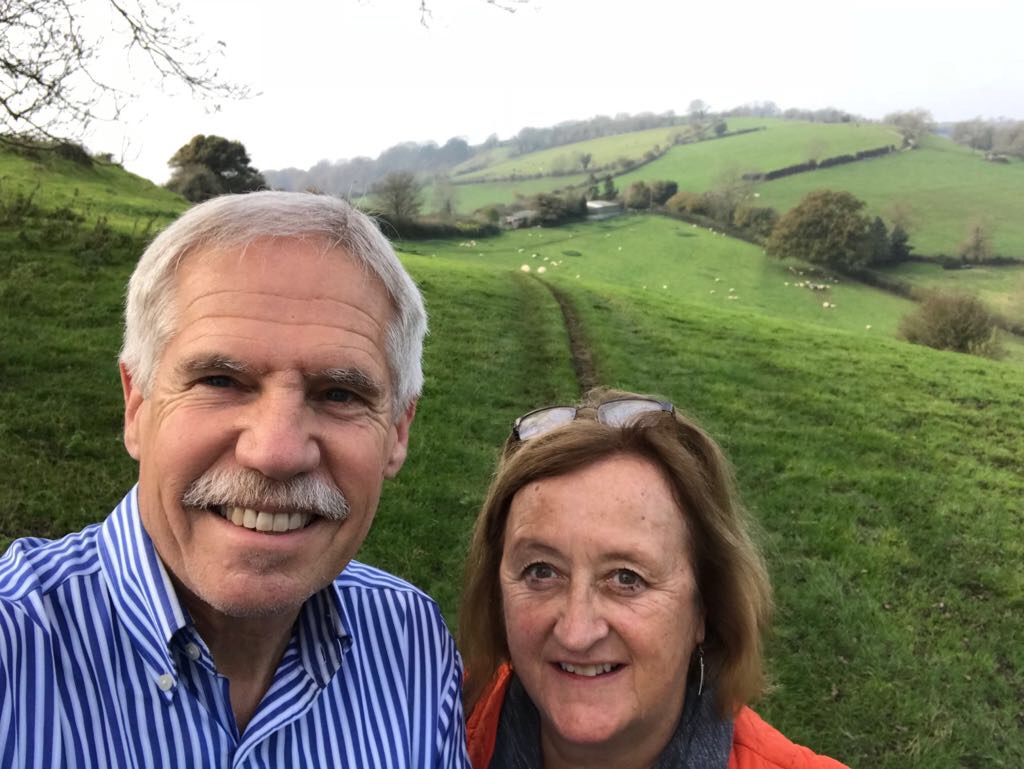
In the last couple days, we've been in and around Flitwick (prounced flit-ick) England.  I spent a day hiking the nearby hills with my nephew Paul, who knows his way around.  The trails and views were amazing.


To use a popular British phrase, I was "chuffed to bits" meaning "very pleased or delighted; happy".  

I didn't get a whole lot of pictures while hiking, but I've included a few to give you an idea.  The original intent was to hike most of the Cotswold Way, but that didn't quite happen.  As it was, we covered a a lot of ground there, and in Scotland, and around the above mentioned Flitwick area. 


--------------------------------------------

There were plenty of other events as well.


Not far from where we stayed in England was a village called Blechley Park.  It is the home of the British efforts to break the secret code of the Germans during WWII.  It was said that the code could not be broken.  

You may have seen the movie Enigma, or The Imitation Game, starring Benedict Cumberbatch.  
Well, this was the actual place where the code breaking took place.  It was a massive effort by thousands, and the fact that it was achieved (they broke the code!) resulted in shortening the war and saving hundreds of thousands of lives. 


The guys who developed the machines that enabled the large team to decipher the code were actually in the process of inventing what became the modern computer.  There are still some replicas in place at the site.


The whole place is like a visit to the past.  The events there took place over 75 years ago.  There were other historic items, like this ambulance shown below. 


--------------------------------------------

Is this place a palace or what?  The great mansions of Great Britain.


Another day trip was a visit to the grounds of one of Britains great "Houses" - a simple word that does not real convey the grand and palatial nature of this building and the grounds around it.  And there are a lot of them in the UK, fantastic estates with with huge gardens surrounded by enormous stately lands. 


One such place is the Wrest House near Bedford England.  We went there on a clear and very cold day and toured not only the grand Mansion, but the gardens that spread out in many directions.  This place dated back to the 1300's.  


Wow!  This place was amazing, and what's even more impressive is that there are many, many such places like it all other England and Scotland.   This one was the home of the Earl of Grey.  


When I visit these fantastic estates, like the one in Scotland where Sir Walter Scott lived (The Scott House), I am always struck by ... how did they amass this wealth in the first place?  These people were the Bill Gates and Warren Buffet of their times.   But often they did not earn the wealth, although Sir Walter did, they were born into it or married into it.  


--------------------------------------------

I will finish this post with one other picture, again related to the war effort in Britain.  There were several posters from the era on the walls of the Blechley Park campus, urging the workers to not talk about the top secret work going on. 

This picture captured the spirit of the times, in a somewhat whimsical way.  Loose lips sink ships!  Be careful what you say, or better yet, don't ever talk about it! 


Friday, November 10, 2017

We Build Statues out of Snow, and Weep to see them Melt - Sir Walter Scott


We have now spent the last week in Scotland, and made a fine time of it.  We tend to keep busy when traveling, and there was a lot to see and do.  We were in the Borders area, where Scotland meets the north of England. 


We even got to do some more hiking, spending a day out in the country.  Great scenery.


This particular area is known for large historical Abbeys, or ancient churches.  It sometimes seems like everything here is a thousand years old.  And much of it is.


Jedburgh (pronounced Jed-burra) the town we stayed in, had a large Abbey.  We explored that and enjoyed the village and went for walks in the nearby area. 


We went on a long hike in the woods and along the Tweed River, and there was an Abbey there called Dryburgh (pronounced Dry-Burra) .  It was quite amazing and contained the grave of Sir Walter Scott, a titanic figure in literary history.  Sir Walter was from this area of Scotland. 


In fact, we went to see his historic house.  Frankly, it was one of the most wonderful "homes" I have ever seen.  It was like a fairy tale castle.  And it was a perfect day with great weather.  A really amazing day!


The above picture is the library in the house. Sir Walter Scott penned many novels; he was the most famous writer of his day - circa 1795.  Below are some of the more common phrases of his that have become part of our everyday language (including the title quote at the top of this blog):


O, what a tangled web we weave when first we practise to deceive!

He that climbs the tall tree has won right to the fruit.

The will to do, the soul to dare.


Too much Rest, is Rust

For success, attitude is equally as important as ability.

Look back, and smile on perils past.


Many a law, many a commandment have I broken, but my word never.


All in all, a jolly smashing time in Scotland!  It was great to spend time with the relatives - Fiona's brother Duncan and his wife Donna - and sister Mabel, who has been with us all along on this trip.


Now we head back to England, near London, for a few more days before leaving for home.    

Tuesday, November 7, 2017

Bonnie Scotland - Off With Her Head!

The town square of Jedburgh at night


Sometimes words are not pronounced the way they look in the Scottish language.  Tonight we find ourselves in Jedburgh in the south of Scotland.  The name of this place is spoken "Jed-burra".  It is a nice town with some significant history, and is located in the Borders region of Scotland.  

The Borders is the area near the border with England.   Scotland and England are two separate countries and are part of the United Kingdom.   Much of our time in Scotland is typically spent up north in the Highlands, but this time we are exploring a different part of the land. 

We arrived here last night, after a long day of driving 400 miles up from the south of England.  We met up with Fiona's brother Duncan and his wife Donna, at the airport in Edinburgh (pronounced Ed-in-burra).

The rain showed up on the way, and it rained hard last night, but the weather was okay today.  The weather here is pretty much like Oregon, although it gets dark a little earlier.  

We went about exploring Jedburgh today and immediately were immersed in the rich history of the area.  There is a well preserved house known as the Mary Queen of Scots House, where Mary stayed in 1566, with a terrific museum to the much misunderstood lady.  She had a tough life, and even though she was Queen for a while, it didn't last long.  There was much treachery, intrigue, and scheming going on, and she was eventually deposed.  

This is a rather polite way of saying they chopped off her head.  Royal transition could be brutal in those days.  Before she died, she did give birth to a son who eventually was known as King James, the first king of the combined Scotland and England.  He was also the guy who was responsible for the King James Bible.  


The view out the window of the Mary House


And at this same house was a base for an ancient cross placed here by the Augustinian Monks in the approximate year of 750 AD.  This goes back a long ways, but has managed to stand the test of time.  

And also, there are pear trees on the property and the surrounding area that were once the pride of Britain and were a hot commodity in London for many years.    You can see the stone and the pear trees in the picture below. 


--------------------------------------------

On the other side of town, which is not far, there is a spectacular Abbey made by later generations of the Augustinian Monks, started around 1150 AD.  Kinda hard for us North Americans to imagine stuff this old.  It's a well preserved relic these days and has some fantastic views. 


Part of the reason these buildings last so long is that they are made of stone.  The stone, like we saw previously in Bath, England, is quarried locally and is very durable.  Buildings made of wood do not last this long.  If you want to make history, make it out of stone. 


The size of these structures never fails to impress.  How did they build this stuff a thousand years ago?  And the stones fit together with precision that would be hard to replicate today.  


It's hard to grasp the scale of these places, and the passing of time. 


In fact, there is a display that talks about the methods used to design and build such an Abbey, and it all started three hundred years before Columbus discovered America.  


Monday, November 6, 2017

We Hit One Finish Line, With More to Come

So this last week was spent in the Cotswold Hills in the southwest of England, with the goal of hiking and exploring the trail from south to north. 


That didn't exactly happen, although we did spend at least part of every day on the trail.  It may have been a bit unrealistic to expect to complete the entire 102 miles.  Especially with Fiona having a bad knee and all.

But it was great fun, and we saw some wonderful places.  The trails are a bit different, maybe not quite as rugged as some of the trails we're used to.


The scenery around here is amazingly - green and awesome.  And that comment is made by a person from Oregon (me).  


For example, I spent some time today walking around the Tower of Broadway.  I know, Broadway does not seem like the name of a small village in the foothills.  The historical town is quaint and charming.  


The Tower stands on a nearby hilltop and anyone who climbs to the top is granted unparalleled views of the surrounding terrain.  Today you could see all the way to Wales.   

We ended the trail in a place with the unusual name of Chipping Campden.  It contained a large 4ft wide medallion in the ground, like the one where we started in Bath.  If you look in the center, it mentions the Cotswold Way - the beginning and end.


And there was an historic old church in Chipping Campden, dating back almost a thousand years.  No kidding, there was a list of the Vicars (Pastors) where the first date was 1180.


The inside of the church has been updated over the long years, but it still drips of tradition and history.


Also, today is Guy Fawkes day, he was the guy who tried to blow up the Houses of Parliament in 1605.  They celebrate the day with fireworks and bonfires and great mayhem. 

We were out walking this evening in Stratford-upon-Avon, the home of Shakespeare.  There were fireworks in the skies.  Kinda like the 4th of July, only it was the 5th of November.  

Just as the sun set, I captured this photo of the fall colors here in Britain. 


Monday the 6th is a travel day.  We head up to Scotland for the next chapter. 


Saturday, November 4, 2017

What's a Trig Point? The More Things Change, and ... Don't Push that Button!

On the road in England and Scotland ...

Fiona's sister Mabel is traveling with us, and we will meet up with more family when we get to Scotland next week.

---------------------------------------------

Part of the goal of this trip was to hike along the Cotswold Way, a trail through the hills of the same name in southwest England.  The challenge was that Fiona's knee is pretty messed up from a previous injury.   

There are certain landmarks along the way, known as Trig Points, which stands for Triangulation Point.  If you are not familiar with this (I wasn't) it's a survey monument or marker that allows you to locate a precise location by "triangulating" from three points.  

Cell towers do this in the modern day.  Trig Points were put into place 80 years ago to precisely measure the British countryside across the entire nation.  I encounterd the one below yesterday.  They are all over the Cotswolds. 


We set out and found our way out of the city to the beginning of the trail.  Actually, there is a shield in the ground at the big Abbey cathedral at the city center, pictured here.


So this is the beginning of the trail, which runs over 100 miles.  We will only be hiking parts of the trail, and yesterday was fun.  The first steps were uphill, leading over the green landscape, past sheep fields and beautiful views.


The weather is just good enough and the scenery is fantastic.  Of course Britain is compact and rather densely populated, so you are never far away from people, or houses, or villages. 


This country is not known for high mountains, except maybe in Scotland.  But the Cotswolds provice their own sense of scale and are a rich source of history 


---------------------------------------------

So we were in Bath, England for a few days with more travel to come, and so far things have been very eventful.  

We've spent time walking around the city, admiring the historical buildings.  They seem to be fond of circular buildings here.

One of the striking things about this place is the number of chimneys here.  In reality, they are all over the country of Great Britain, the innumerable chimneys at the top of the structures.  It harkens back to a time that has now passed for the most part. 

As the country became more established in the 1800's, and achieved a position of major significance in the world, a big part of it was the Industrial Revolution.  This time period gave Britain a rapidly growing economy and relative power and affluence.  

So more homes were built, and they were made of stone.  This helps to preserve the historical nature of many buildings - stone does not deteriorate.  But homes made of stone are also hard to heat.  especially in a cold climate like Britain.   That presented a challenge that was met with  ... coal.


Coal was abundant in the UK and became an enormous industry.  It dominated the economy in many ways, much the way oil does now.  It fueled the vast industry of Britain in those days.  But you have to burn coal, and that's what all the chimneys were for.  

Looking back, it was a time of vast expansion of the British economy, and coal was king.  The impact was really big: All the miners and equipment digging it out of the ground, the railroads and canals to transport it, the delivery men to bring it to homes, the fireplace builders, the chimney sweeps, and dustmen to haul off the ash, and so on.  

A big problem with coal - it also generated a hell of a lot of smoke.  This created a tremendous problem with air pollution in Britain.  


Fiona, who grew up here in the UK, tells the story of when she lived here - not too long ago - there was a choking smoke in London that killed thousands of people and made the air lethal to breathe - and this was in the 1950's and 60's!  

In the meantime - in other words, since then - the world has come up with other sources to power industry and heat homes.  Things like electricity, clean burning natural gas, hydro power, solar power, wind energy, conservation, and yes, even nuclear power.  

Coal is diminishing as a power source, and - despite how some people may feel - it ain't coming back.  There are cleaner alternatives.  The days of burning coal have been on the decline.  Even in China, the world's largest coal consumer, it has declined for three years in a row.   

But when you look at all these buildings in Britain and elsewhere, you see the remnants of a by-gone time.  

There was a large semi-circular building I passed today that had (and I counted them) 348 chimneys!  Good heavens, that's a lot of chimneys!  It represents a time that has mostly beome a thing of the past. 

--------------------------------------------

Upstairs, Downstairs?

We were getting into a crowded elevator in our hotel this morning before we left Bath.  There were several ladies in the elevator.  One of them was pushing the button to go down to the lobby, but it wasn't working.  

There were two buttons, and I mentioned that the one she was pushing was the wrong one.  I pointed out that one was for the servants.  When I said this, much to my surprise, everyone immediately burst out laughing.  I didn't understand; what's so funny about that?
  

After everyone exited the elevator, Fiona and her sister Mabel informed me that - ahem - you don't call people servants, they are maids and hotel staff!  Oops!


Thursday, November 2, 2017

A Mill, a Muntjac, and a Dog Named Larry


Tonight we find ourselves in Bath, England, after staying with Fiona's sister Mabel in Flitwick (pronounced Flit-ick, you don't say the "W").  There is an interesting old mill there across the road from Mabel's house, you can see the guy in the picture above carving the millstone. 

---------------------------------------------

We went for a walk last evening.  There are footpaths everywhere around this area, and before very long, we entered some woods with shady trails.  

There were some fields spread out interwoven into the woods, and in one of those fields and we were surprised to see a rather unusual looking animal. 

It was a ways off and the sun was going down, so it was hard to identify what kind of animal we were looking at.   Was it a sheep?  A deer?  It seemed to be neither fish nor fowl. 

In a couple minutes another walker came by with a dog.  Actually he wasn't walking, he was in sitting down on one of those wheeled trolley things like they have in Wal-Mart, and we was tooling down the trail.  He was quite talkative. 

He explained to us "It's a Muntjac!"  We were not exactly clear on what he was saying, he had a thick British accent.  Hunh?  A MunkJack?  A MunTack?  What, is it like a deer?

"Yes, it's sort of a short stubby deer. They were somehow released (or escaped) from a local wildlife refuge named Woburn Abbey." Do Abbeys have deer?  Like Downton Abbey?


Anyway I have included a picture of this beast, it's not the most impressive animal, frankly it looked kinda funky.  They're feral and kind of wander around nibble on plants.  

Like I said, the guy that was explaining this was riding along on his little motorized trolley with a dog.  The dog's name was Larry.  And Larry barked and charged at the "deer" and tried to chase it.  The man shouted out "Larry, come back here!  Get back here NOW Larry!"  

But the deer was completely uninterested.  The Muntjac looked at Larry, ignored him, and kept chewing his cud - if deer do that sort of thing. 

So the dog stopped and stared at the deer.  Larry seemed to be weighing in his mind: "If you're not gonna run, I'm not gonna chase you!" and eventually lost interest.  He turned and trotted back to his owner and they rambled off. 

All in all, it was a somewhat curious episode, both the weird animal, and the man on the trolley in the woods with a dog named Larry.

--------------------------------------------

Historic Bath England, where we are staying tonight, is the home of an ancient Roman bath site, hence the name.  This place goes back a few hundred years.  Apparently there were some thermal hot springs next to the river here, and the clever Romans converted them to a sort of public bath.  

There are still some existing bath pools, but you can't use them, they are now just a tourist attraction.  


We took the train to get here, which entailed a couple of changes during the journey including the London Underground subway.  It was a pleasant trip.


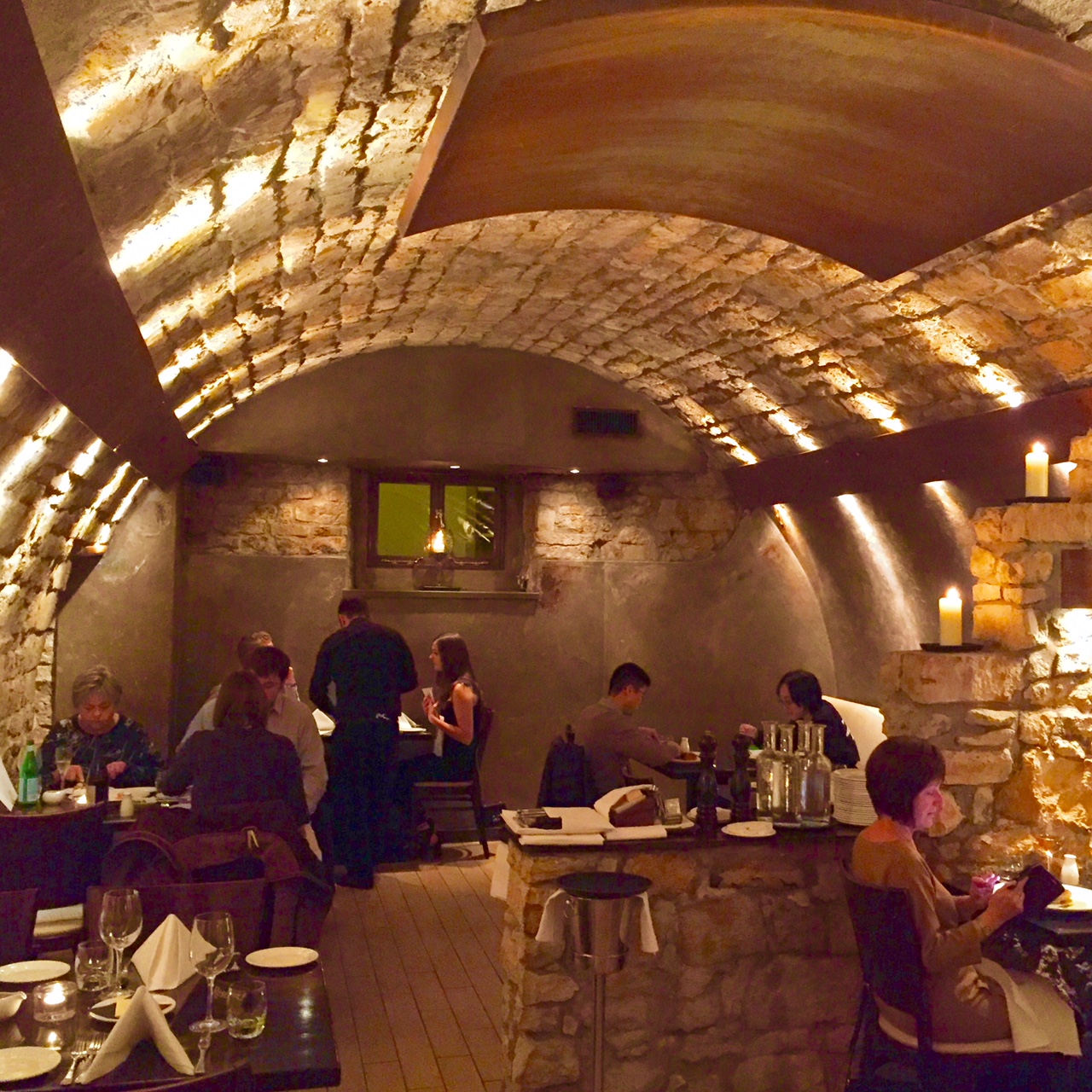
We are making our way to the trails through the Cotswold Hills, where we plan to do some hiking in the next week.   In the meantime we went to dinner in an old restaurant in a cave below the ground.  It was super cool.  


Tomorrow promises to be interesting, as we begin to hike ... hopefully.  Fiona's sister Mabel is traveling with us, and she is good company.  Unfortunately she is not up for much "off road" hiking, and Fiona is struggling with a knee injury.  The hiking may be rather limited.  They may end up shopping instead, although this place is a major homeplace and theme for the classic Jane Austen novels. 


Tuesday, October 31, 2017

The Return of the Blog


I've taken some time off lately - off the road that is.  In other words, I've been home for an extended stretch, working hard and getting my new winery registered.   

But as I type this, Fiona and I are sitting at the airport, getting ready to board a plane for Great Britain for a visit to England and Scotland.  Of course, those who know Fiona are aware she was born and raised in Scotland.

So we are in the process of making several stops, and spending time with family.  The weather promises to be much the same as Oregon this time of year.  A bit cold and wet, with nice days in between.  

First stop is London (Luton) and then it's off to the Cotswolds, which look like the picture below. 


The idea is to do some hiking along the Cotswold Way - a trail that runs for over a hundred miles - but that might be in doubt.  Fiona got run over by a horse in Senegal, Africa, a few months ago and her knee is still in dubious condition.  But we will give it our best effort.  

Then after that, we stay in Chipping Campden (yes, that's the name of a town, shown below) then we will take the train up to Scotland.  The guys dancing at the top of this post are from Chipping Campden, and I have no idea what they are doing.  But it looks like they're having a good time.  I suspect there may have been some drinking involved. 


Once we get started, our first stop is Bath.  The name comes from the Roman baths established there in the middle ages because of thermal waters.   Not the most original name for a city, but certainly appropriate.  I usually take showers, but maybe I'll make an exception ...